

What Is an Indefinite Contract?
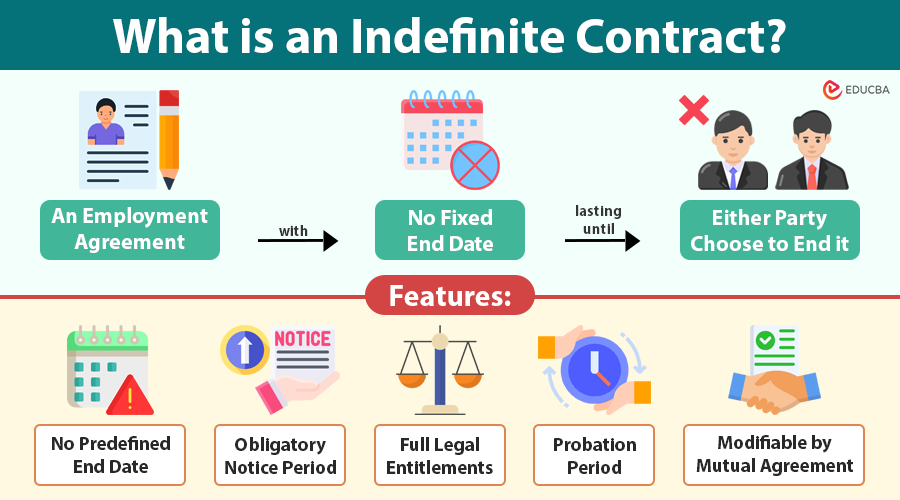
An indefinite contract is a type of employment agreement that does not have a fixed end date and remains in effect until either the employer or the employee decides to terminate it.
For example, a marketing firm hires a graphic designer for a permanent role with no end date. The designer signs an indefinite contract, meaning they will stay employed until they choose to resign or the company ends the contract according to legal procedures.
Table of Contents
Key Features of an Indefinite Contract
Understanding the characteristics of an indefinite contract helps both parties avoid misunderstandings and prepare for a successful employment relationship. Here are its primary features:
1. No Predefined End Date
The most distinguishing feature is the lack of an end date. The contract stays valid indefinitely unless terminated by resignation, dismissal, retirement, or mutual agreement.
2. Obligatory Notice Period
Termination requires a formal notice period. This period may vary depending on the country, industry, job level, and duration of service. For example:
- In India: Usually 30–90 days
- In the UK: Typically one week to 12 weeks based on length of service
- In the UAE: A minimum of 30 days.
The purpose of the notice period is to provide time for transition and replacement.
3. Full Legal Entitlements
Employees on indefinite contracts are generally eligible for the complete range of statutory benefits, such as:
- Paid annual leave
- Sick leave
- Health insurance
- Retirement fund or pension contributions
- End-of-service benefits (in certain regions)
- Maternity and paternity leave
- Unemployment benefits (in eligible countries).
4. Probation Period (Optional)
Many indefinite contracts begin with a probationary period, commonly ranging from 3 to 6 months. During this time, either party can terminate the contract with shorter notice, allowing both to evaluate fit and performance.
5. Modifiable by Mutual Agreement
Both the employer and the employee can change the terms of an indefinite contract—such as salary, job title, work location, duties, or work style (like remote or hybrid)—if they agree to the changes.
Common Clauses in an Indefinite Contract
While specifics may vary by employer and region, most indefinite contracts include the following standard clauses:
1. Job Title and Responsibilities
This outlines the official designation and detailed duties, setting clear expectations for performance and accountability.
2. Working Hours and Location
Specifies whether the role is full-time or part-time and includes work timings, days, and work-from-home eligibility, if any.
3. Salary and Compensation Structure
Details about base salary, payment frequency, overtime rules, bonuses, incentives, and performance-based appraisals.
4. Leave Policies
Clarifies entitlements for annual leave, casual leave, medical leave, public holidays, and any special leave.
5. Confidentiality and Data Protection
Ensures the employee protects proprietary information and sensitive business data during and after employment.
6. Termination Process
Includes termination clauses such as:
- Cause vs. no-cause termination
- Notice period
- Grounds for dismissal (e.g., misconduct, poor performance).
7. Post-Employment Clauses
May include:
- Non-compete restrictions
- Non-solicitation of clients or staff
- Return of company assets and data.
Benefits of Indefinite Contracts
Indefinite contracts benefit both employers and employees in different but equally important ways.
For Employers
1. Talent Retention
Indefinite contracts encourage employee loyalty, making it easier for organizations to retain skilled workers long-term. Reduced attrition means less time and money spent on recruiting and onboarding.
2. Improved Productivity
Permanent employees often have a better understanding of internal systems, organizational goals, and team dynamics, making them more effective contributors.
3. Enhanced Employer Brand
Companies known for offering stable, indefinite contracts often attract better talent and enjoy a stronger reputation in the job market.
4. Legal Compliance
Most labor laws prioritize indefinite contracts as the norm. Using them demonstrates ethical practices and protects companies from legal scrutiny or penalties.
For Employees
1. Job Security
An open-ended contract offers financial and psychological stability, allowing employees to plan long-term careers and life goals.
2. Access to Comprehensive Benefits
Employees with indefinite contracts usually receive better benefits compared to short-term or gig workers. These benefits improve quality of life and job satisfaction.
3. Opportunities for Career Growth
Permanent employees are more likely to receive promotions, skill development support, and internal transfers.
4. Legal Protections
They are often covered by stricter labor rights, including protection against unfair dismissal, harassment, wage delays, and workplace safety violations.
Legal Considerations
1. Jurisdiction-Specific Laws
Each country has specific legal provisions that govern indefinite contracts. For example:
- European Union: Prioritizes indefinite employment under Directive 1999/70/EC.
- India: The Industrial Disputes Act governs the termination of permanent employees.
- UAE: Recent labor reforms have transitioned most workers to limited-term contracts, but earlier systems recognized indefinite contracts.
- USA: Employment is often “at will,” which resembles indefinite contracts but allows termination by either party at any time.
2. Fair Dismissal Requirements
Employers must provide valid, legal reasons and follow due process. Wrongful termination of an indefinite contract can lead to legal disputes and financial penalties.
3. Severance and Compensation
In many jurisdictions, long-term employees are entitled to severance pay based on years of service, unless terminated for cause.
4. Contract Renewal Is Not Required
Unlike fixed-term contracts, indefinite contracts do not need regular renewal. However, performance reviews and renegotiations of terms (e.g., salary, title) are common.
Termination of an Indefinite Contract
Employers or employees can still end indefinite contracts in certain situations, even though they do not have a set end date.
- Resignation: The employee voluntarily leaves the position, usually with a written notice.
- Dismissal: The employer ends the contract, either for cause (e.g., misconduct, policy violation) or no cause (e.g., role redundancy).
- Mutual Agreement: Both parties agree to part ways amicably, often with a negotiated settlement or exit plan.
- Retirement or Death: Contracts naturally end when an employee reaches retirement age or, in the case of death.
Regardless of the reason, termination must follow proper legal and procedural norms to avoid disputes or claims.
Indefinite vs. Fixed-Term Contract: A Comparative View
| Aspect | Indefinite Contract | Fixed-Term Contract |
| Duration | No end date | Defined end date or project completion |
| Job Security | High | Low |
| Notice Period | Required by law or contract | Often shorter or none |
| Eligibility for Benefits | Full statutory benefits | Sometimes limited or partial |
| Usage Scenario | Long-term, ongoing roles | Temporary roles, seasonal work, internships |
When Should Employers Use Indefinite Contracts?
- When the business requires long-term employees for core roles
- To attract high-quality talent with job security and benefits
- To comply with local labor laws that discourage excessive temporary hiring
- When investing in training, onboarding, or internal promotion pipelines
- To build a loyal, stable, and experienced workforce.
Challenges Associated with Indefinite Contracts
Despite the advantages, indefinite contracts are not without limitations:
- Termination Complexity: Employers must follow strict processes to terminate, which may involve documentation, hearings, or legal review.
- Costly Benefits: Employers often spend more on full-time employees in terms of health insurance, leave, and severance payments.
- Performance Risk: Over time, some employees may become complacent or resistant to change without the periodic evaluation pressure associated with contract renewals.
- Legal Liability: Poorly written contracts or mismanaged dismissals can lead to labor court cases, reputational damage, and monetary losses.
Final Thoughts
An indefinite contract is more than just an open-ended agreement—it is a commitment between employer and employee built on trust, mutual benefit, and legal structure. It brings stability, fosters professional growth, and aligns with best labor practices around the globe.
For businesses aiming to cultivate a strong organizational culture and for individuals seeking long-term career opportunities, the indefinite contract remains the gold standard in employment relationships.
Before signing this type of agreement, both the employer and the employee should clearly understand their responsibilities, rights, and possible outcomes. If needed, they should also get legal advice to ensure everything is fair and transparent.
Frequently Asked Questions (FAQs)
Q1. Can an indefinite contract be converted into a fixed-term contract?
Answer: Yes, sometimes an indefinite contract can become a fixed-term contract, but only if the employee agrees in writing and there is a clear reason for the change. For instance, if an organization is restructuring or planning to outsource a department, it may offer a fixed-term extension for transition.
Q2. Can an employee on an indefinite contract take a sabbatical or unpaid leave?
Answer: Yes, employees on indefinite contracts are generally eligible to apply for sabbaticals or unpaid leave, depending on company policy and local labor laws. Approval is subject to the employer’s discretion and operational needs.
Q3. What happens if a company closes or undergoes bankruptcy while I am on an indefinite contract?
Answer: If a company closes or goes bankrupt, it can legally end indefinite contracts. In such cases, employers may provide severance pay, notice compensation, or access to government unemployment benefits, depending on local labor laws.
Q4. Can I negotiate the terms of an indefinite contract after signing it?
Answer: Yes. Although the original terms are fixed, the employer and employee can agree to change the contract at any time. Common renegotiations include salary revisions, job role changes, remote work arrangements, or flexible hours.
Recommended Articles
We hope this detailed guide to indefinite contracts has given you a clear understanding of their structure, benefits, and legal aspects. Explore these recommended articles to learn more about employment types, contract laws, and workforce management strategies.
