

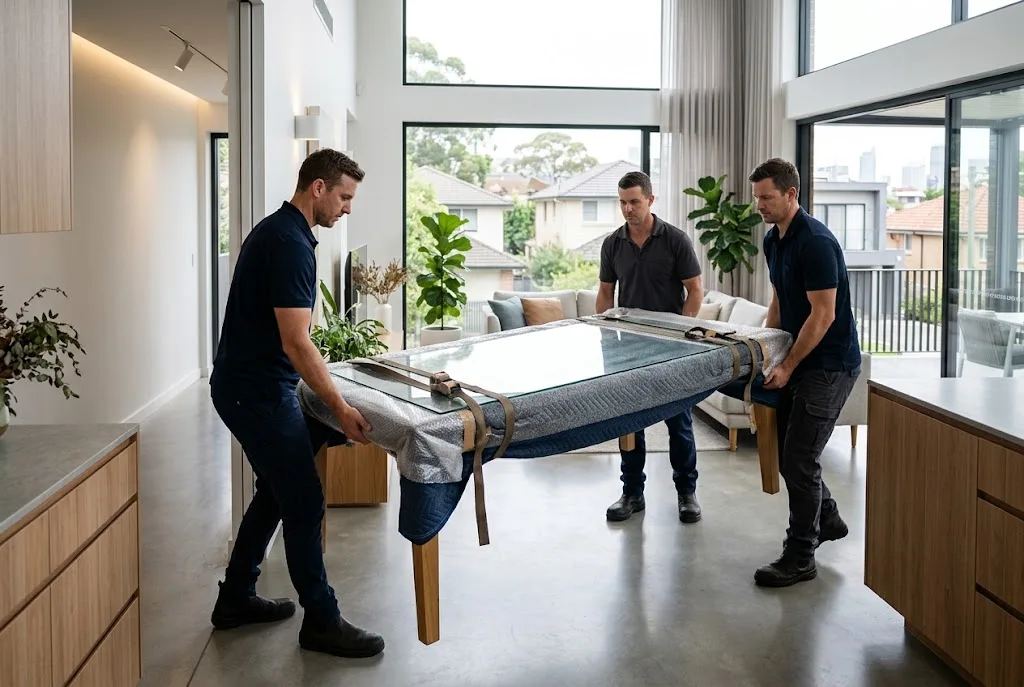
Moving fragile furniture is very different from simply carrying a sofa or a few boxes from one property to another. Glass tables, mirrors, antiques, marble surfaces, delicate timber furniture and valuable décor can be damaged by an incorrect lift, poor wrapping, awkward loading or unsecured transport.
That is why many Sydney homeowners choose professional furniture movers when a relocation includes delicate or high-value belongings. Professional movers can bring specialist packing materials, protective equipment, trained handling techniques and a structured loading plan that may be difficult to reproduce during a DIY move.
However, professional moving does not automatically guarantee that nothing will go wrong. The quality of the service depends on the provider, the crew, the equipment and the arrangements made for particularly sensitive items. This guide explains where professional movers can have an advantage over DIY moving and what you should check before booking.
Why Fragile Furniture Requires Extra Care
Fragile furniture can be vulnerable at several stages of a move. Damage may happen while an item is being dismantled, carried through a doorway, lowered down stairs, placed inside a vehicle or secured for transport.
Common risks include:
- Scratches and scuffs on finished surfaces
- Cracked or shattered glass
- Chipped corners and edges
- Broken fittings or handles
- Damage caused by poor lifting technique
- Movement inside the vehicle during transit
- Moisture or weather exposure
- Damage caused by incorrect disassembly or reassembly
Professional preparation is designed to reduce these risks rather than relying on improvised household materials and last-minute decisions.
1. Professional Movers Use Purpose-Suitable Packing Materials
One of the clearest differences between a professional move and a DIY move is access to suitable protective materials.
Depending on the item, professional movers may use furniture blankets, bubble wrap, foam, shrink wrap, protective corners, strong cartons and other packing materials. Specialist providers may also offer custom crating for particularly sensitive belongings.
For example, Allied Moving Services says its trained removalists use specialist packing materials and techniques for fragile belongings such as artwork, electronics and glassware, with custom crating available for particularly sensitive items.
Some Sydney removalists also offer dedicated fragile-only packing, allowing customers to pack ordinary belongings themselves while professionals handle the items that require more care.
2. They Assess the Item Before Moving It
A fragile item should not simply be picked up and carried without considering its size, weight, construction and route.
Professional movers can assess factors such as:
- Whether the furniture needs to be dismantled
- How many people are needed to carry it safely
- Whether a trolley or lifting equipment is appropriate
- How much protective padding is required
- Whether doorways, staircases or lifts create access problems
- How the item should be positioned inside the moving vehicle
This preparation can be particularly useful for large or awkward furniture where a mistake could damage both the item and the property.
3. Furniture Can Be Disassembled Before Transport
Some furniture is safer to transport after partial or complete disassembly.
Beds, wardrobes, dining tables and modular furniture may be easier to carry through narrow spaces after suitable components have been removed. Professional movers can also keep fittings organised so the furniture can be reassembled at the destination.
Several Sydney moving companies specifically offer furniture disassembly and reassembly as part of their services.
DIY movers can also dismantle furniture, but the main challenge is knowing which parts should be removed and how to protect fittings, joints and finished surfaces during the process.
4. They Use Better Handling Techniques
Fragile furniture needs more than protective wrapping. The way it is lifted and carried also matters.
Professional crews may use two-person or team lifting, dollies, straps, sliders and other moving equipment where appropriate. These tools can make heavy or awkward items easier to control and reduce the temptation to drag or lift furniture incorrectly.
For example, specialist Sydney removalists describe using straps, protective padding and appropriate equipment for delicate or bulky furniture.
5. They Plan the Route Through the Property
A fragile item can be perfectly packed and still be damaged if it cannot be manoeuvred safely through the property.
Professional movers may consider:
- Doorway widths
- Staircases
- Lift dimensions
- Low ceilings
- Tight corridors
- External steps
- Driveway access
- Distance between the property and moving vehicle
Planning the route before lifting a large item can help prevent avoidable contact with walls, doors, railings and other obstacles.
6. Loading the Truck Requires Careful Planning
Once furniture leaves the property, the job is not finished. How belongings are positioned and secured inside the moving vehicle is another important part of protecting fragile items.
Heavy items generally need to be positioned and secured so they do not shift into delicate belongings during transport. Protective blankets, straps and other restraints can help reduce movement and contact between items.
The exact loading method depends on the vehicle, furniture and overall load. Professional crews can plan the arrangement rather than simply filling available space.
7. They Know When an Item Needs Specialist Treatment
Not every fragile item should be treated like ordinary household furniture.
Examples include:
- Antique furniture
- Large mirrors
- Glass display cabinets
- Marble or stone tabletops
- Artwork
- Grandfather clocks
- Pianos
- High-value designer furniture
Particularly sensitive pieces may require specialist packing, custom crating, additional labour or a different transport arrangement. Allied, for example, specifically mentions custom crating for particularly sensitive items such as valuable artwork and glassware.
8. Professional Packing Can Save Time
Packing fragile belongings yourself can take considerably longer than expected. Each item needs to be wrapped, padded, placed correctly and labelled before the moving process even begins.
Professional packing services can take over some or all of this work. Sydney providers commonly offer full packing, partial packing or fragile-only packing options.
This can be particularly useful when a household has limited time before moving day.
9. Insurance and Liability Need to Be Considered
Insurance is another important difference between professional and DIY moving, but it should not be assumed that every moving company automatically provides the same level of cover.
Australian moving providers can offer different types of protection, and policies may have exclusions or conditions relating to self-packed items, pre-existing damage, high-value belongings and storage.
Before booking, ask the removalist:
- What insurance or liability cover applies?
- Is the cover included in the quoted price?
- Are self-packed fragile items covered?
- Are antiques, artwork or high-value items subject to special conditions?
- What happens if an item is damaged during transit?
- Does cover continue if the goods enter storage?
Recent Australian guidance notes that “removalist insurance” can refer to different types of protection and that exclusions vary between policies. Checking the actual terms is therefore more useful than relying on the phrase “fully insured” alone.
10. Professionals Can Handle Difficult Access
Sydney properties can present a variety of access challenges, from apartment lifts and narrow staircases to tight driveways and restricted parking.
Professional movers regularly work with different property layouts and can plan how large furniture should be moved through the available space.
That does not mean every difficult item can be moved without risk. Extremely large or unusual furniture may require specialist equipment, additional crew members or a pre-move assessment.
Professional Movers vs DIY: Fragile Item Comparison
| Factor | Professional Movers | DIY Move |
|---|---|---|
| Packing materials | Purpose-suitable professional materials available | Usually relies on purchased or household materials |
| Handling experience | Trained moving crew | Depends on personal experience |
| Heavy furniture | May use dollies, straps and team lifting | Often relies on available people and equipment |
| Disassembly | May be included as a service | Customer handles it |
| Fragile packing | Dedicated packing options may be available | Customer packs the items |
| Loading strategy | Planned around weight, shape and protection | Usually organised by the customer |
| Insurance options | May be available depending on provider and policy | Usually relies on existing personal cover or separate arrangements |
| Convenience | Less physical work for the customer | Requires significant time and effort |
When Is DIY Moving Still a Reasonable Choice?
Professional movers are not necessary for every relocation.
A DIY move may make sense when:
- You are moving only a small number of belongings
- The furniture is inexpensive and robust
- You have suitable transport
- You have enough people to lift safely
- The route has easy access
- You are comfortable handling packing and loading
However, the calculation changes when the move includes irreplaceable or expensive fragile items. In those situations, the potential cost of one damaged piece may outweigh the money saved by doing everything yourself.
When Should You Hire Professional Furniture Movers in Sydney?
Professional movers are particularly worth considering when your move involves:
- Antique furniture
- Large glass furniture
- Artwork or mirrors
- Marble or stone surfaces
- Heavy wardrobes or cabinets
- High-value designer pieces
- Difficult staircases or apartment access
- Long-distance transport
- Large household relocations
- Items that you do not feel confident dismantling or carrying
The more difficult the item is to replace, the more important proper preparation and handling become.
How to Choose Furniture Movers for Fragile Items
Ask About Fragile Packing
Do not assume that a standard moving package includes specialist fragile packing. Ask specifically what materials and techniques will be used.
Ask About Disassembly and Reassembly
If you have wardrobes, beds, tables or other large furniture, confirm whether dismantling and reassembly are included or charged separately.
Check Insurance Terms
Ask for details of the applicable insurance or liability arrangements rather than relying only on a marketing statement.
Discuss High-Value Items in Advance
Tell the removalist about antiques, artwork, glass furniture and other valuable pieces before moving day. Some items may require special planning or a different service.
Check Reviews and Experience
Look for recent reviews that specifically mention fragile furniture, careful handling, packing or difficult moves. General ratings are useful, but relevant customer experiences provide more useful context.
How to Prepare Fragile Furniture Before the Movers Arrive
Even when hiring professionals, homeowners can make the move easier by preparing in advance.
- Remove loose objects from drawers and shelves
- Tell the movers about existing damage
- Remove artwork and mirrors from walls
- Disconnect electronics where appropriate
- Keep important keys and fittings together
- Clear pathways through the property
- Reserve suitable parking space where possible
- Identify especially valuable or fragile items before the crew arrives
Some Sydney removalists specifically recommend clearing furniture of breakable objects and notifying the crew about existing damage before the move begins.
Final Thoughts
Professional furniture movers in Sydney can have a significant advantage when a relocation includes fragile or valuable belongings. Their main benefits are not simply physical strength but the combination of planning, appropriate packing materials, handling equipment, loading techniques and experience.
That does not mean professional moving is risk-free or that every company provides the same standard of service. The best approach is to compare removalists carefully, ask how fragile items will be packed and transported, and check the actual insurance or liability terms before booking.
For a simple move involving sturdy furniture, DIY may be perfectly reasonable. But when your move includes antique pieces, glass furniture, artwork, marble, delicate timber or other difficult-to-replace belongings, professional handling can provide a level of preparation and control that is difficult to achieve with an improvised DIY move.
