

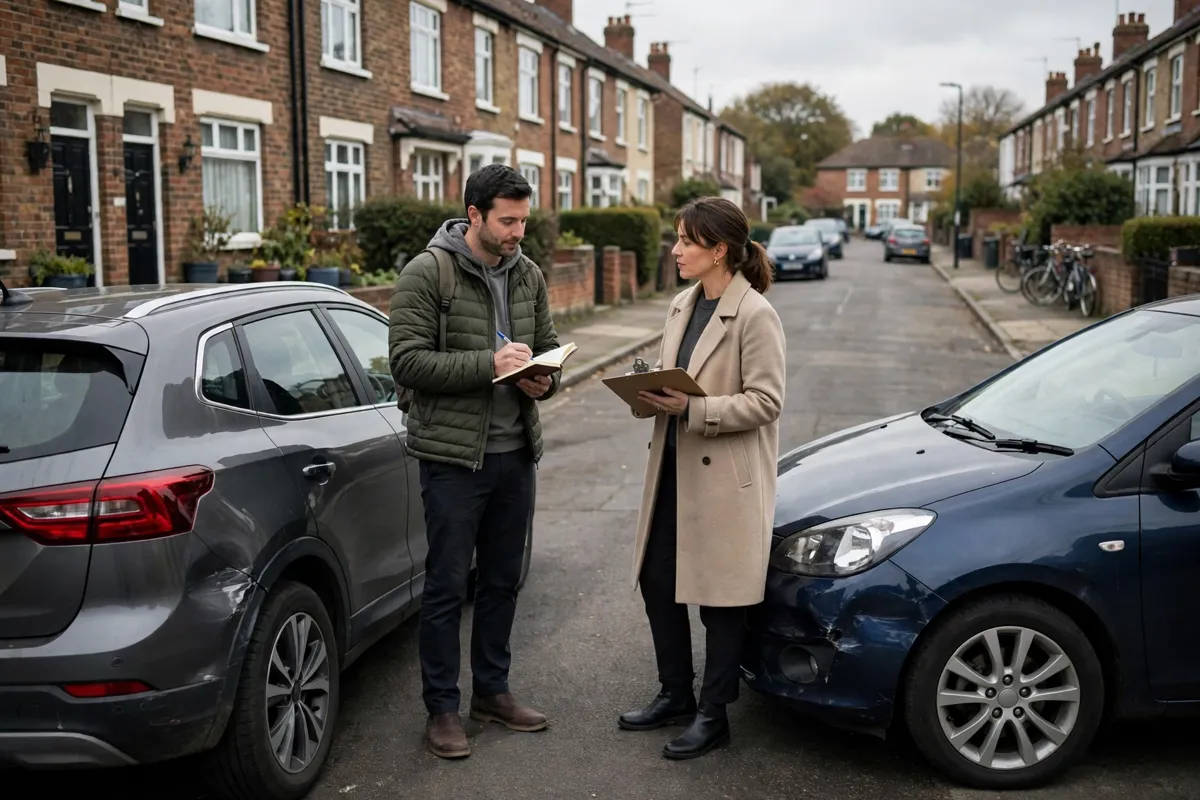
Knowing what to do after a car accident is something most drivers only think about once it has already happened — standing at the roadside, heart racing, unsure what to say or who to call. The minutes after a collision matter: the details you gather and the order you do things in can decide how smoothly your insurance claim, your repairs and any legal questions are resolved. This step-by-step guide covers the UK rules in plain English. It is general information, not legal advice.
First: Make the Scene Safe
Stop the car as soon as it is safe to do so — failing to stop at the scene of an accident where damage or injury has occurred is an offence. Switch off the engine, turn on your hazard lights and, if you have one and it is safe to use, place a warning triangle at a sensible distance behind the vehicle. Check yourself and your passengers for injuries first, then check on the people in the other vehicle. If anyone is hurt, the road is blocked, or you feel unsafe, call 999 straight away.
Stay calm and keep the conversation factual. It is natural to apologise out of shock or politeness, but avoid saying anything that accepts blame at the roadside — a simple “are you alright?” does everything an apology does, without creating problems later.
Exchange Details: What the Law Requires
Under the Road Traffic Act 1988, drivers involved in an accident that causes damage or injury must stop and give their name and address to anyone who reasonably asks, along with the vehicle owner’s details if different, and the vehicle’s registration number. In practice, exchange all of the following with the other driver:
- Full name and address
- Vehicle registration number, make and model
- Insurance company name and policy number
- Phone number
Take a photograph of the other car’s number plate and their insurance details if they show you documents — it removes any argument about what was shared. If the other driver refuses to give details, leaves the scene, or you could not exchange information, you must report the accident to the police as soon as reasonably possible and within 24 hours. The same duty applies if someone is injured and you cannot provide details at the scene.
Gather Evidence While You Are There
Modern phones make this the easiest step. Photograph both vehicles from several angles before they are moved, showing the damage, the final positions, number plates, road markings, skid marks and any relevant signs or weather conditions. Photograph the wider scene too — a junction layout or a obscured sign can matter weeks later when memories have faded.
If your car has a dash cam, save the relevant clip before it is overwritten; our guide to how to choose a dash cam explains which features make footage genuinely useful as evidence. Ask any independent witnesses for their names and contact details and whether they would be willing to confirm what they saw. Finally, write down your own account the same day: time, direction of travel, speed, what each vehicle did, and anything the other driver said. Courts and insurers both give more weight to notes made at the time than to recollections months later.
Who to Call, and in What Order
Once everyone is safe and details are exchanged, call your insurer — most policies require you to report an accident promptly even if you do not intend to claim, and many insurers run 24-hour claims lines for exactly this situation. Report what happened factually, share the other driver’s details and your evidence, and ask what they will arrange: recovery if the car cannot be driven, a courtesy car if your policy includes one, and their approved repair process.
If your car is undriveable and you are arranging your own recovery, keep every receipt; reasonable recovery costs are normally part of the claim. And if injuries emerge later — stiffness or whiplash symptoms often appear the next day — see your GP or an NHS urgent treatment centre and keep the records, because medical evidence is what supports any injury claim.
Getting the Car Repaired
Repairs are where costs and confusion both multiply, so understand your options before you authorise anything. Our guide to vehicle repair costs in the UK breaks down typical prices for common jobs, which helps you judge whether an estimate is fair. For minor damage where the car still drives safely, a mobile mechanic may be the most convenient route — our guide to mobile auto repair explains what mobile mechanics can and cannot fix at your home.
If the damage is structural or the car is under warranty, a manufacturer-approved route may matter more than price; drivers of particular marques can compare options in our roundup of the best Toyota service centres as one example of what to look for. Whatever you choose, get estimates in writing, keep every invoice, and do not authorise extra work without a price agreed first. If you hold one of the car service plans we have reviewed, check whether any of the repair or inspection elements are already covered before paying twice.
What Not to Do
Do not agree a private cash settlement at the roadside without thinking it through — hidden damage and late-appearing injuries can turn a cheap settlement into an expensive mistake, and your policy may require the accident to be reported anyway. Do not post about the accident on social media; insurers and solicitors do read those posts. Do not throw away damaged items, receipts or your written account, however minor the accident seemed. And do not let anyone pressure you into signing documents at the scene — the only exchange required of you is your details.
Before Your Next Trip
Once the claim is under way, there is nothing more to do but let it run its course — and use the experience. Restock the car with a warning triangle, a phone charger and your insurer’s number saved in your contacts. Our checklist for preparing your car for a long road trip covers the wider readiness checks that keep small problems from becoming roadside ones. Nobody plans to have an accident, but the driver who knows the steps in advance handles the worst day of motoring far better than the one improvising at the roadside.
