

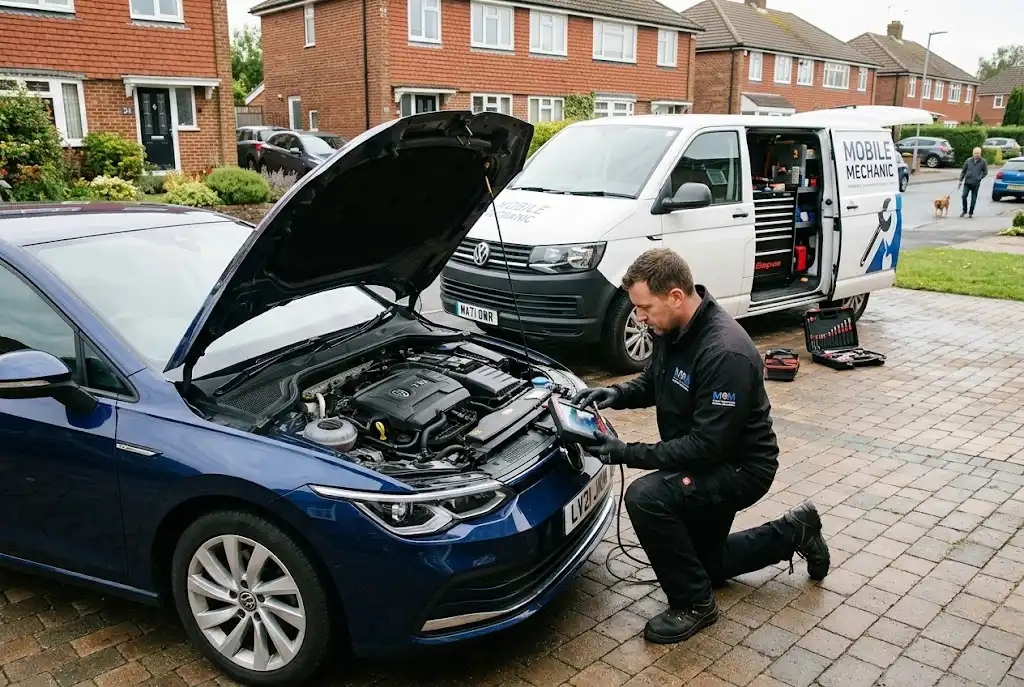
A mobile auto service can be a practical alternative to taking your vehicle to a traditional garage. Instead of driving to a workshop, a mobile mechanic can travel to your home, workplace or another suitable location to carry out certain maintenance, diagnostics and repair work.
This approach can save time and reduce the inconvenience of arranging transport when your car needs attention. However, mobile mechanics cannot perform every type of repair at every location. The right choice depends on the problem, the vehicle, the equipment required and whether the work can safely be completed away from a workshop.
What Is a Mobile Auto Service?
A mobile auto service brings automotive expertise and equipment directly to the customer’s vehicle. Depending on the provider, services can range from routine maintenance and mobile diagnostics to battery replacement, minor repairs and roadside assistance.
Some providers operate as independent mobile garages, while others specialise in particular types of repairs. A mobile mechanic may work at a customer’s home or workplace, whereas a roadside mechanic is more likely to assist when a vehicle has broken down unexpectedly.
Because services vary considerably, always check what a provider can complete at your chosen location before making an appointment.
How Does a Mobile Mechanic Work?
The process is usually straightforward. You explain the problem or maintenance requirement, provide the vehicle’s location and arrange a suitable appointment. The mechanic then arrives with the tools and equipment needed for the agreed work.
For a known repair, you may receive a quotation before the visit. For an unknown fault, the mechanic may need to inspect or diagnose the vehicle first before confirming exactly what needs to be repaired.
If additional work is identified, ask for an explanation and revised price before authorising anything outside the original agreement.
What Can a Mobile Auto Service Do?
Mobile services can cover a wide range of jobs, although the available options depend on the provider and vehicle.
Mobile Diagnostics
Electronic diagnostics can help investigate warning lights and fault codes. A mechanic can connect appropriate diagnostic equipment to the vehicle and use the results as part of the fault-finding process.
However, a diagnostic scan does not automatically identify every mechanical problem. A fault code can indicate an area requiring investigation rather than proving that a particular component needs replacement.
Battery Services
Battery testing, replacement and related electrical checks are among the types of work that can often be carried out away from a conventional workshop.
This can be particularly useful when a vehicle will not start and cannot easily be driven to a garage.
Minor Mechanical Repairs
Depending on their equipment and working environment, mobile mechanics may complete selected mechanical repairs at a customer’s location. The precise range can include certain brake, starting, electrical or component replacement jobs.
Ask the mechanic whether your specific repair can be completed safely on-site. Some jobs require a vehicle lift, specialist workshop equipment or controlled working conditions.
Home Servicing
Some providers offer home servicing, allowing routine maintenance to take place at a customer’s property. This can be convenient for drivers who have limited time or prefer not to spend hours waiting at a garage.
Before booking, confirm exactly what the mobile service includes and whether it follows the maintenance requirements applicable to your vehicle.
Mobile Auto Service vs Traditional Garage
Neither option is automatically better. Each is suited to different circumstances.
A mobile mechanic can be convenient when the vehicle is accessible and the required work can be completed safely on-site. You may avoid arranging transport and may be able to remain at home or continue working while the repair is carried out.
A traditional garage, however, usually has access to a wider range of workshop equipment. Vehicle lifts, specialist machinery and larger parts inventories can make a conventional workshop more appropriate for complex repairs.
The best option is therefore determined by the job rather than simply by convenience.
When Is a Mobile Mechanic a Good Choice?
A mobile mechanic can be particularly useful when:
- Your vehicle cannot easily be taken to a garage.
- You need a convenient repair at home or work.
- You require a diagnostic inspection.
- The repair is suitable for on-site work.
- You want to avoid spending time waiting at a workshop.
- You need selected maintenance services at your location.
For routine maintenance that requires more extensive workshop facilities, a conventional garage may still be the better option. Drivers can compare broader auto services in the UK when deciding which type of provider fits their needs.
Roadside Mechanic and Emergency Repairs
A roadside mechanic can be useful when a vehicle develops a problem during a journey. Depending on the provider and circumstances, roadside assistance may involve diagnosing the fault, carrying out a minor repair or helping the vehicle become mobile again.
Not every breakdown can be repaired at the roadside. A serious mechanical failure may require recovery to a properly equipped workshop.
If the vehicle is stopped somewhere dangerous, your priority should be personal safety and following appropriate breakdown procedures rather than attempting to arrange or perform a repair yourself.
Can a Mobile Mechanic Carry Out Servicing?
In many cases, selected servicing work can be completed at a customer’s location. This is often described as at-home servicing or mobile servicing.
The service should still be appropriate for the vehicle’s maintenance schedule. Drivers should check the manufacturer’s recommendations and ask the provider what checks, consumables and scheduled maintenance items are included.
Our guide to car servicing explains the differences between interim, full and major service options and why the service level matters.
What About Mobile Diagnostics?
Mobile diagnostics can be useful when a dashboard warning light appears or the vehicle develops an unexplained electronic fault. A technician can inspect the vehicle at your chosen location rather than requiring you to drive it to a garage.
The quality of the diagnosis depends on the technician’s experience, equipment and ability to interpret the information. A professional approach should involve investigating the underlying problem rather than simply clearing a warning light.
Ask whether the diagnostic fee includes an inspection or only a scan, and whether the cost of any subsequent repair is separate.
How Much Does Mobile Auto Service Cost?
The cost of a mobile auto service varies according to the type of work, vehicle, location, parts and labour involved. A simple battery-related visit may have a very different price from a complex diagnostic investigation or mechanical repair.
Mobile providers may also structure their pricing differently from conventional garages. Some charge a call-out fee, while others incorporate travel into the labour price or provide a fixed quotation for specific jobs.
Before booking, ask:
- Is there a call-out or travel charge?
- Is diagnosis charged separately?
- Are parts included?
- Is labour included in the quotation?
- Will VAT be added?
- What happens if the repair cannot be completed on-site?
For broader guidance on comparing servicing prices, see our article on car service cost.
How to Choose a Mobile Garage
Convenience should not be the only consideration. Before booking a mobile garage, look for clear information about its services, experience and pricing.
Check customer reviews for recurring comments about punctuality, communication, workmanship and unexpected charges. It is also useful to ask whether the provider has experience with your particular vehicle make, model or repair type.
A good provider should explain what they can realistically do on-site. Be cautious of anyone who promises to complete every possible repair without first considering the vehicle and working conditions.
Questions to Ask Before Booking
These questions can make the appointment clearer:
- Can you complete this repair at my location?
- What equipment will you need?
- Is the initial inspection or diagnosis charged separately?
- Is there a call-out fee?
- Are parts included in the quotation?
- What warranty is provided on the work?
- What happens if the repair requires workshop equipment?
- Will you obtain approval before carrying out additional work?
Clear answers can help you avoid unnecessary delays and unexpected costs.
When a Mobile Service Is Not the Best Option
Some repairs are better suited to a fully equipped workshop. Complex jobs may require a vehicle lift, specialist machinery, controlled working conditions or extensive dismantling.
Major engine, transmission or structural repairs can therefore be unsuitable for many mobile providers. Likewise, a vehicle that has suffered serious damage may need professional recovery rather than an attempt at an on-site repair.
If the mechanic determines that the vehicle needs workshop attention, follow that recommendation rather than trying to force a mobile repair into a situation it is not designed for.
How to Get Better Value From Mobile Auto Services
Give the mechanic as much useful information as possible when making the booking. Explain warning lights, symptoms, recent repairs and when the problem started. Accurate information can help the provider bring the right equipment or parts.
Ask for an estimate before the visit where possible, but understand that an unknown fault may require diagnosis before an accurate repair price can be confirmed.
Keep invoices and repair records after the work. A clear maintenance history can make future diagnosis and servicing easier.
Final Thoughts on Mobile Auto Service
A mobile auto service can make vehicle maintenance and selected repairs considerably more convenient. Mobile mechanics can bring tools, diagnostics and technical expertise directly to your home, workplace or roadside location.
However, mobile servicing has practical limits. Complex repairs may still require a conventional workshop with specialist equipment, while roadside assistance may only be able to diagnose or temporarily resolve certain problems.
The best approach is to match the provider to the job. Check exactly what is included, compare pricing, ask about call-out charges and make sure additional work requires your approval. With those checks in place, a mobile mechanic can be a useful part of your wider vehicle maintenance options.
For a broader comparison of vehicle maintenance choices, explore our guides to car servicing and MOT and service packages.
