

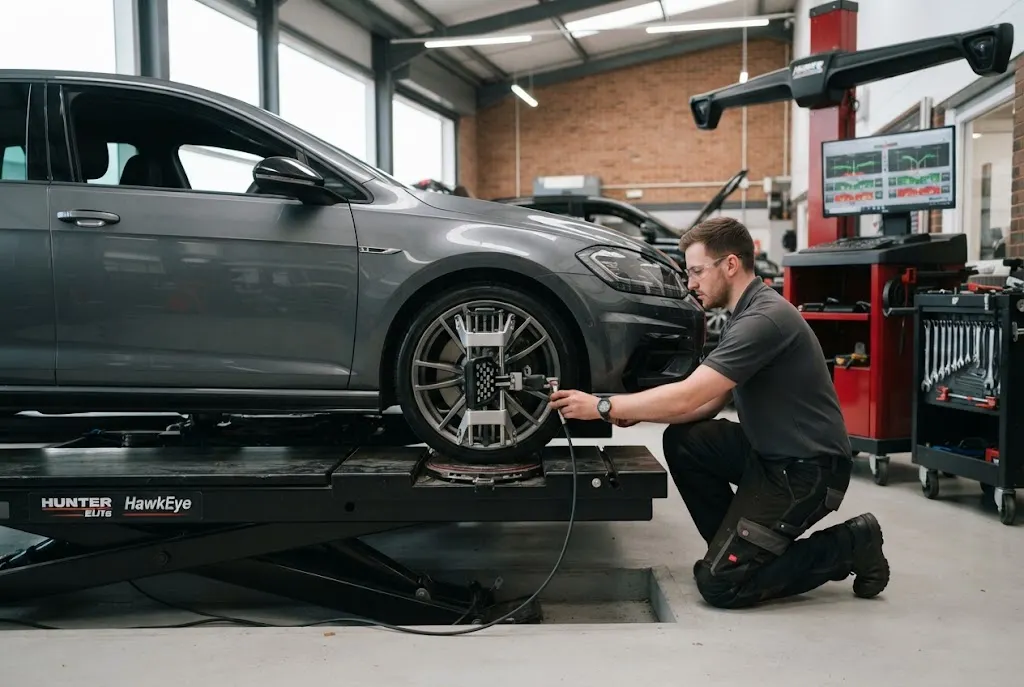
Choosing the right garage is about more than comparing the advertised price. Drivers should consider the quality of the alignment equipment, technician experience, diagnostic process and whether the garage checks related suspension, steering and tyre issues before making adjustments.
What Is Wheel Alignment?
Wheel alignment is the process of checking and, where necessary, adjusting the angles that determine how a vehicle’s wheels are positioned relative to the vehicle and the road. Correct geometry helps the vehicle track as intended and can contribute to consistent handling and tyre wear.
Alignment specifications vary between vehicles. A suitable garage should therefore use the correct manufacturer specifications or appropriate vehicle-specific settings rather than applying a generic adjustment.
Alignment is not the same as wheel balancing. Balancing addresses the distribution of weight around a wheel and tyre assembly, while alignment concerns wheel and suspension geometry. Both can affect how a vehicle feels on the road, but they address different problems.
When Should You Get a Wheel Alignment Check?
Several symptoms can justify an alignment inspection. The vehicle may pull noticeably to the left or right, the steering wheel may remain off-centre when driving straight, or the tyres may show unusual wear patterns.
A significant impact with a pothole or kerb can also justify a check, particularly if the vehicle’s handling feels different afterwards. Alignment may also need attention following certain suspension or steering repairs.
However, these symptoms do not automatically prove that alignment is the cause. Tyre pressure, worn suspension components, steering faults and wheel or tyre problems can produce similar behaviour. A proper inspection helps separate these possibilities.
Wheel Tracking and Alignment
The term wheel tracking is commonly used by garages and drivers when discussing alignment. In everyday automotive language, tracking can refer to adjustments that help ensure the wheels point and travel correctly relative to one another.
Because terminology can vary between providers, ask the garage exactly what its advertised tracking or alignment service includes. A basic adjustment may not be equivalent to a comprehensive four-wheel alignment check.
Ask whether the garage measures the vehicle before making adjustments and whether you will receive the alignment readings. This can provide useful evidence of what was found and what was changed.
Wheel Alignment and Tyre Wear
Incorrect alignment can contribute to uneven tyre wear. If a wheel is not positioned according to the vehicle’s required geometry, certain areas of the tyre may experience more wear than intended.
Uneven wear should not automatically be blamed on alignment, however. Incorrect tyre pressures, suspension wear, driving conditions and tyre-related problems can also affect how a tyre wears.
That is why a good alignment service should include a visual assessment of the tyres and relevant components before adjustments are made. If a suspension component is worn, correcting the alignment alone may not resolve the underlying problem.
Wheel Balancing vs Wheel Alignment
Wheel balancing and alignment are two different services that are sometimes confused. Balancing addresses uneven weight distribution in the wheel and tyre assembly, while alignment addresses wheel positioning and geometry.
Vibration at certain speeds can sometimes point towards a balancing issue, although other mechanical or tyre-related problems can also produce vibration. Pulling to one side or an off-centre steering wheel is more commonly associated with alignment or related steering and suspension issues.
If you are unsure which service your vehicle needs, describe the symptoms to the garage rather than requesting a particular repair without an inspection.
Why Steering Alignment Matters
Steering alignment is closely connected to the way the front wheels and steering system interact. If the steering wheel does not sit correctly while the vehicle is travelling straight, an alignment check may be appropriate.
However, steering symptoms can also indicate worn or damaged suspension and steering components. If a vehicle has excessive play or a damaged component, simply adjusting the alignment may not be an adequate repair.
For this reason, alignment work should ideally be performed alongside a suitable inspection of the relevant steering and suspension components.
If your vehicle is also showing signs of suspension wear, our guide to suspension repair explains the symptoms, diagnostics and replacement considerations drivers should understand.
What Happens During a Specialist Wheel Alignment?
A specialist wheel alignment service generally begins with checking the vehicle and tyres before measurements are taken. The technician then uses alignment equipment to measure the relevant wheel angles.
Depending on the vehicle and the equipment available, the garage may check multiple alignment measurements rather than making a single adjustment. If readings fall outside the appropriate specifications and the vehicle’s components are suitable for adjustment, the technician can make the necessary changes.
A quality service should not simply adjust everything automatically. If the readings suggest a damaged or worn component, the underlying problem should be investigated before alignment adjustments are relied upon.
Choosing Wheel Alignment Services
When comparing wheel alignment providers, ask what equipment they use and whether they can provide before-and-after readings. Modern alignment systems can measure multiple angles and provide technicians with detailed information about the vehicle’s geometry.
It is also worth asking whether the price covers all four wheels or only a particular axle. The appropriate service depends on the vehicle’s design and the symptoms being investigated.
Look for a garage that explains the results clearly and tells you if another problem has been identified. Transparent communication can be more valuable than choosing a provider based solely on the cheapest advertised price.
Understanding Alignment Cost
Alignment cost varies depending on the vehicle, the type of service, the garage and whether additional adjustments or repairs are required. A basic tracking adjustment may have a different price from a comprehensive alignment measurement and adjustment.
When comparing prices, ask what is included. Find out whether measurements are included before adjustment, whether a printout or digital report is provided and whether any additional work is charged separately.
A low headline price is not necessarily comparable with a higher quotation if the two garages are offering different levels of inspection or adjustment.
Our garage comparison guide can help you assess automotive providers more broadly, while our auto repair services guide covers other common vehicle repair requirements.
Wheel Alignment After Suspension or Steering Repairs
Some suspension and steering repairs can alter wheel geometry. After relevant work, the garage may recommend checking alignment to make sure the vehicle’s settings remain appropriate.
This is particularly important when components involved in wheel positioning have been replaced or adjusted. Completing an alignment check can help confirm that the vehicle is tracking correctly after the repair.
If your vehicle has recently required suspension work, review our guide to suspension repair for more information about the relationship between suspension components and handling.
How to Prepare for an Alignment Appointment
Before booking, make a note of any symptoms you have noticed. Tell the technician if the vehicle pulls in one direction, the steering wheel feels off-centre, tyres are wearing unevenly or the vehicle has recently hit a pothole or kerb.
Also mention any recent suspension, steering or tyre work. This information can help the technician determine which checks are appropriate.
Tyre pressures should also be considered because incorrect pressures can affect handling and tyre wear. A professional garage can confirm the relevant pressures and inspect the tyres as part of its assessment.
Wheel Alignment and Regular Vehicle Maintenance
Alignment is one part of broader vehicle care. Regular inspections can help identify issues involving tyres, steering, suspension, brakes and other components before they become more disruptive.
Our vehicle maintenance guide provides broader information about keeping up with routine checks. If your vehicle has developed a braking concern alongside handling changes, our guide to brake services covers brake inspections, repairs and replacement considerations.
Final Thoughts on Wheel Alignment
The right wheel alignment service should provide accurate measurements, appropriate adjustments and a clear explanation of the results. Drivers should not assume that every pulling, vibration or tyre-wear problem is caused by alignment alone.
A thorough garage will consider the condition of the tyres, suspension and steering system before making adjustments. Comparing what different providers include in their service can also help you avoid paying for a limited adjustment when a more complete inspection is appropriate.
By choosing a garage with suitable equipment, experienced technicians and transparent pricing, drivers can make more informed decisions when their vehicle needs alignment or related handling checks.
