

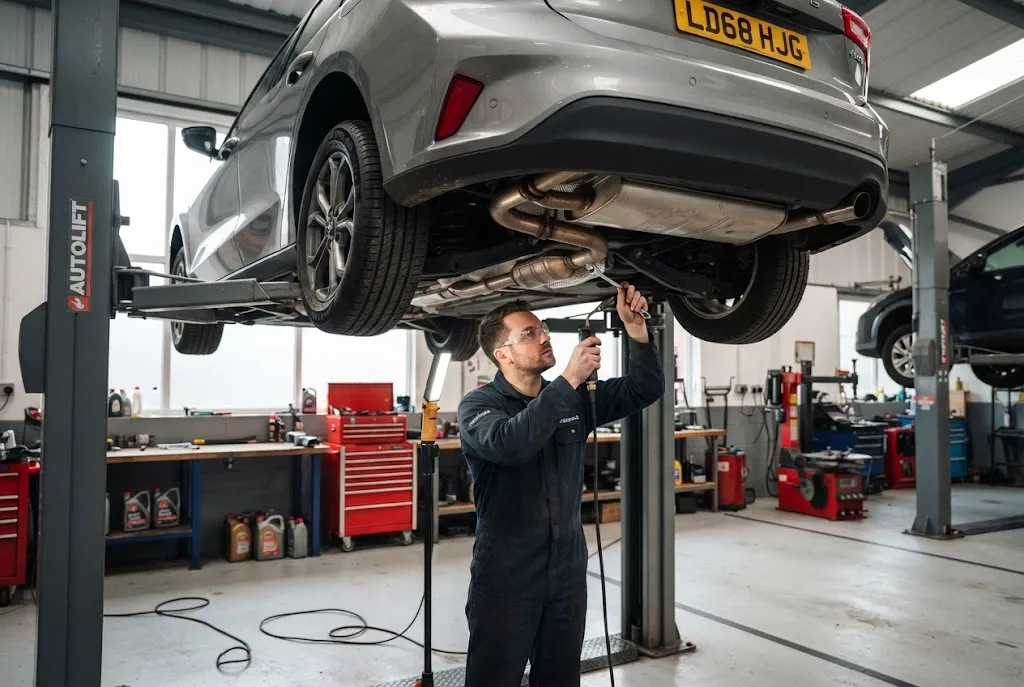
Choosing the right UK garage means looking beyond the advertised repair price. Drivers should consider the quality of the inspection, technician experience, parts being used, diagnostic equipment and whether the garage can identify the actual cause of the problem before recommending replacement.
What Does Auto Exhaust Repair Include?
Auto exhaust repair covers a range of services because an exhaust system contains several components. Depending on the vehicle, the system can include exhaust pipes, silencers, catalytic converters, exhaust manifolds, flexible sections, sensors and associated mounting components.
A garage may repair a damaged section, replace an individual component or recommend a larger replacement when several parts have deteriorated. The appropriate solution depends on the condition and design of the vehicle’s exhaust system.
A proper inspection should therefore come before authorising extensive work. A technician can identify where the fault is located and determine whether repair or replacement is the most suitable option.
Common Signs You Need Exhaust Repair
Exhaust problems can produce several noticeable symptoms. A louder-than-usual exhaust note is one of the most obvious, particularly if the vehicle suddenly becomes noisier during acceleration.
Drivers may also notice rattling, hissing or unusual vibrations. Visible damage, corrosion or loose components underneath the vehicle can also indicate an exhaust problem.
Other symptoms can involve vehicle performance or dashboard warnings. If an engine warning light appears alongside changes in running behaviour, the problem may involve the exhaust system or another engine-related component. Diagnostic testing can help establish the cause.
Why an Exhaust Inspection Matters
An exhaust inspection allows a technician to assess the condition of the system rather than relying only on the symptom reported by the driver.
The inspection may include checking pipes, joints, silencers, catalytic converter components, mounting points and other visible parts. The technician may also look for signs of corrosion, impact damage, leaks or loose components.
An exhaust problem can sometimes be relatively minor, while damage to an important emissions-control component may require a more involved repair. A proper inspection helps distinguish between these situations.
For broader information about keeping your vehicle in good condition, our vehicle maintenance guide covers routine checks and preventative care.
Exhaust Repair vs Exhaust Replacement
Exhaust replacement is not always necessary when a vehicle develops an exhaust fault. If a repairable section has failed while the surrounding components remain in suitable condition, a garage may be able to repair or replace only the affected part.
However, replacement can make more sense when a component is severely corroded, structurally damaged or no longer suitable for continued use. The age and condition of neighbouring components may also influence the recommendation.
Ask the garage to explain why replacement is necessary and which part has failed. If several components are being recommended, request an itemised quotation so you can understand exactly what the repair involves.
Understanding Catalytic Converter Repair
Catalytic converter repair requires particular care because the catalytic converter is an important emissions-control component. Problems involving the converter can sometimes trigger dashboard warning lights or affect emissions performance.
Not every warning associated with a catalytic converter means the converter itself has failed. Sensor problems, engine-running issues and other faults can produce related symptoms or diagnostic codes.
For this reason, a garage should diagnose the underlying fault before recommending an expensive replacement. Ask whether the recommendation is based on a diagnostic test, physical inspection or both.
Emissions Repair and Vehicle Performance
Emissions repair can involve different parts of the vehicle depending on the cause of the problem. Exhaust leaks, emissions-control components, sensors and engine-management issues can all require investigation.
Modern vehicles use electronic systems to monitor engine and emissions performance. A warning light therefore does not necessarily identify the failed component by itself. Diagnostic equipment can provide fault information that needs to be interpreted alongside the vehicle’s symptoms and physical condition.
Where emissions-related issues are suspected, it is better to have the vehicle assessed promptly rather than repeatedly replacing parts without establishing the cause.
When to Consider Mobile Exhaust Repair
Mobile exhaust repair can be useful for certain faults where the required work can safely be completed at the vehicle’s location. This can be particularly convenient when a vehicle is difficult to drive because of a significant exhaust problem.
However, mobile services do not necessarily offer the same equipment or facilities as a fully equipped workshop. The suitability of mobile repair depends on the fault, vehicle condition and work required.
Before booking, ask what the mobile technician can inspect and repair, whether diagnostic equipment is available and whether the vehicle might need to be taken to a workshop if additional problems are discovered.
Choosing Exhaust Specialists
Exhaust specialists can be particularly useful when a vehicle has a complicated exhaust or emissions problem. Specialist experience can help when the fault involves several connected components or requires detailed diagnosis.
When comparing providers, ask whether they have experience with your vehicle make and model and whether they can diagnose emissions-related warning lights. It is also worth asking about the parts they use and any warranty provided on replacement components.
A good garage should explain the fault in straightforward terms and provide a clear quotation before carrying out additional work. Transparent communication is especially important when a repair involves expensive emissions-control components.
How to Compare Exhaust Garages
Different exhaust garages may offer different levels of inspection and repair. Comparing the headline price alone can therefore be misleading.
Ask whether the quotation covers diagnosis, parts, labour and any required follow-up checks. Find out whether the garage is proposing a complete system replacement or only replacing the failed component.
You should also consider customer feedback, relevant experience, warranty arrangements and whether the garage has appropriate diagnostic and exhaust-testing equipment.
Our garage comparison guide can help you assess garages more broadly, while our auto repair services guide covers other common vehicle repair requirements.
What Affects Auto Exhaust Repair Cost?
The cost of auto exhaust repair varies according to the vehicle, damaged component, parts required and labour involved. A small repair to a damaged section can have a very different price from replacing a catalytic converter or multiple exhaust components.
Vehicle make and model can also affect parts availability and replacement costs. Before approving the work, request an itemised quotation and confirm whether VAT, labour and parts are included.
When comparing two garages, make sure both quotations cover the same work. A cheaper quote may involve a different component, a different repair method or fewer diagnostic checks.
Exhaust Problems and Your MOT
Exhaust condition and emissions can form part of the MOT assessment, but an MOT should not be treated as a substitute for routine vehicle maintenance.
Problems that develop between MOT tests can still affect vehicle operation and roadworthiness. If your vehicle develops a significant exhaust noise, warning light or other unusual symptom, arranging an inspection is preferable to simply waiting for the next scheduled test.
If an exhaust issue appears alongside a dashboard warning, our upcoming guide to auto diagnostic services will cover vehicle diagnostics, fault-code reading and warning-light investigations in greater detail.
How to Prepare for an Exhaust Repair
Before visiting a garage, note the symptoms you have experienced. Tell the technician when the noise or warning started, whether it changes during acceleration and whether the vehicle has recently experienced an impact underneath.
If a warning light has appeared, avoid assuming that the visible symptom identifies the failed component. A professional diagnostic assessment can help determine whether the exhaust is actually responsible or whether another system is contributing to the problem.
Also ask the garage to explain any recommended replacement in writing. This makes it easier to compare quotations and understand what work is being authorised.
Final Thoughts on Auto Exhaust Repair
The right auto exhaust repair service should begin with an accurate inspection and, where necessary, appropriate diagnostic testing. A garage should identify the affected component, explain the repair options and provide a clear quotation before carrying out additional work.
Drivers should also remember that exhaust symptoms can overlap with engine, emissions and diagnostic problems. Replacing an expensive component without establishing the underlying cause can result in unnecessary expense.
By comparing experienced exhaust garages, asking about diagnostic procedures, checking parts and warranty arrangements, and choosing a repair based on the vehicle’s actual condition, drivers can make more informed decisions about exhaust maintenance and repairs.
