

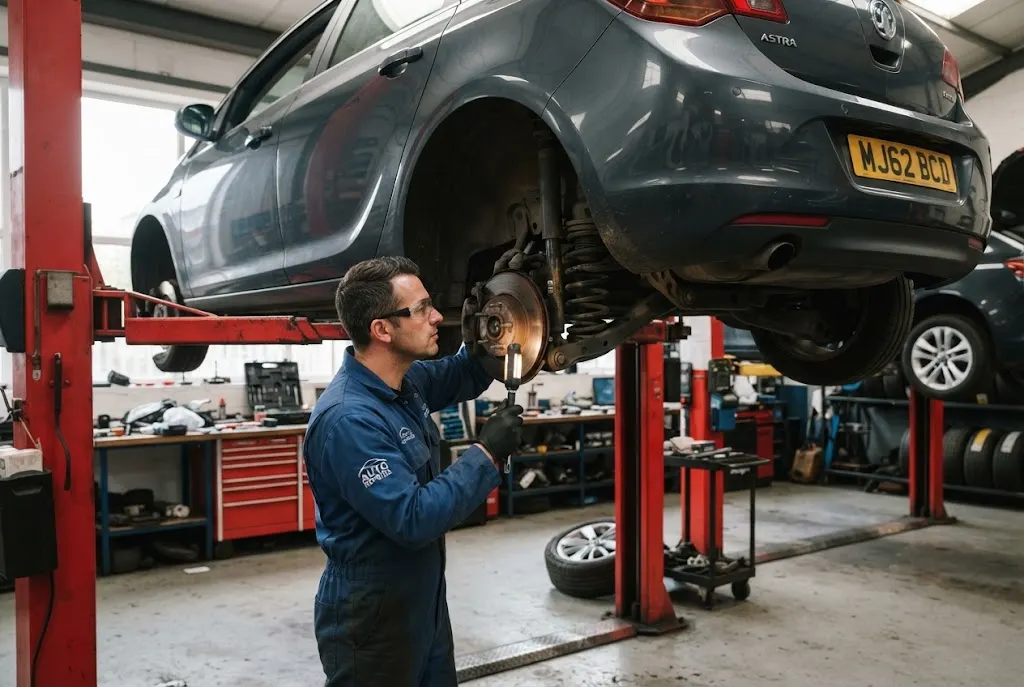
Choosing the right garage involves more than finding the cheapest quote. Drivers should consider the garage’s diagnostic process, experience with their vehicle, repair recommendations, parts quality and whether related steering or alignment problems are also being considered.
What Does Suspension Repair Involve?
Suspension repair can involve inspecting, repairing or replacing several components. Depending on the vehicle, the system may include shock absorbers, springs, struts, control arms, bushes, ball joints and other connecting components.
Not every suspension problem requires complete replacement. A technician should first establish which component is worn or damaged and determine whether related parts have also been affected.
A proper inspection may include checking for leaking shock absorbers, damaged springs, excessive movement, worn bushes and unusual play in suspension joints. The technician can then recommend the appropriate repair rather than replacing components unnecessarily.
Common Signs You May Need Suspension Repair
Suspension problems can develop gradually, so drivers may initially notice changes in how the vehicle feels rather than an obvious mechanical failure.
Common symptoms include excessive bouncing after going over bumps, unusual knocking sounds, uneven tyre wear, excessive body movement through corners and a vehicle that feels less stable than usual. A car may also sit unevenly if a spring or another component has developed a significant fault.
Changes in steering behaviour can also accompany suspension problems. If the vehicle pulls to one side, the steering wheel no longer feels centred or the car behaves differently after hitting a pothole, it is sensible to have the suspension and steering systems checked.
Suspension Diagnostics Before Replacement
Accurate suspension diagnostics can prevent unnecessary parts replacement. A technician should investigate the symptoms and inspect the relevant components before recommending major work.
Some problems can produce similar symptoms. For example, uneven tyre wear may be associated with suspension wear, incorrect alignment or tyre-related issues. Likewise, a knocking noise could originate from different components depending on the vehicle and circumstances.
This is why a good garage should explain what it has found rather than simply presenting a list of replacement parts. Ask what component has failed, how the fault was identified and whether any related parts need attention.
When Is Suspension Replacement Necessary?
Suspension replacement may be required when components are excessively worn, damaged or no longer operating correctly. The exact repair depends on the vehicle and the failed component.
Shock absorbers and struts can deteriorate over time, while springs can weaken or fracture. Bushes and joints can also wear through normal use. If one component has failed, the technician may inspect related components to determine whether they remain suitable for continued use.
In some cases, components are replaced in pairs where appropriate. This can help maintain more consistent behaviour across the same axle, although the correct approach depends on the vehicle manufacturer’s requirements and the condition of the components.
Suspension Maintenance and Vehicle Safety
Regular suspension maintenance can help identify developing problems before they become more disruptive. Maintenance may form part of a broader vehicle inspection or service rather than being a separate visit every time.
Drivers should pay particular attention after driving over significant potholes or other road hazards. A strong impact can affect suspension, steering, wheels or tyres, even when there is no immediately visible damage.
Keeping tyres correctly inflated and checking for unusual wear can also provide useful clues about the condition of the vehicle. If a tyre is wearing unevenly, the cause should be investigated rather than simply replacing the tyre without addressing the underlying issue.
For wider preventative care, our vehicle maintenance guide provides a useful starting point for understanding routine vehicle checks.
How Suspension Affects Ride Comfort
One of the most noticeable roles of a suspension system is its effect on ride comfort. A properly functioning system helps control how the vehicle responds to uneven surfaces, bumps and changes in road conditions.
Worn components can make the vehicle feel unsettled over rough roads. Excessive bouncing, harsh impacts or unusual movement may indicate that the suspension is no longer controlling the vehicle as effectively as it should.
However, ride comfort alone is not enough to diagnose a suspension fault. A professional inspection is still necessary because similar sensations can have different causes.
Suspension Repair and Steering Repair
Suspension and steering systems are closely related, so a garage may inspect both when a vehicle develops handling problems. Steering repair may be necessary if the problem involves components responsible for controlling the direction of the vehicle.
Symptoms such as steering vibration, pulling, unusual play or a steering wheel that does not remain centred should be investigated. The issue may involve suspension components, steering components, wheel alignment or a combination of factors.
For this reason, avoid assuming that every handling problem requires suspension replacement. A proper diagnosis can identify the actual source of the problem and prevent unnecessary expenditure.
Why Steering Alignment Matters
After certain suspension or steering repairs, checking steering alignment may be appropriate. Changes to suspension components can affect the geometry that determines how the wheels sit and track relative to one another.
Incorrect alignment can contribute to uneven tyre wear and changes in handling. If your vehicle has developed unusual tyre wear or pulls to one side, a garage may recommend an alignment check after examining the suspension and steering systems.
You can learn more about this related service in our guide to wheel alignment, particularly if your suspension problem has also affected how the vehicle tracks on the road.
Choosing Suspension Specialists
When looking for suspension specialists, consider whether the garage has experience working on your type of vehicle and the specific suspension system involved. Modern cars can use different suspension designs, electronic systems and manufacturer-specific components.
A suitable garage should have appropriate lifting and inspection equipment and be able to explain its findings clearly. Ask whether the initial assessment is included in the quoted price and whether you will receive a written estimate before replacement work begins.
It is also useful to check what warranty is offered on replacement parts and labour. A transparent repair process makes it easier to compare garages without focusing solely on the headline price.
Comparing Suspension Garages
Different suspension garages may approach the same problem differently. When comparing providers, look at the scope of the inspection, the proposed repair, parts used, labour charges and aftercare.
Ask each garage to explain whether the quotation covers diagnosis, parts, labour and any necessary follow-up checks. If the vehicle also needs wheel alignment or steering work, clarify whether those services are included or quoted separately.
Our garage comparison guide can help you consider the factors that matter when comparing automotive service providers. For broader repair requirements, you can also explore our auto repair services guide.
What Does Suspension Repair Cost?
The cost of suspension repair varies according to the vehicle, damaged component, parts required and labour involved. A relatively simple component replacement can have a very different price from a repair involving multiple suspension or steering components.
Vehicle make and model can also affect parts availability and labour requirements. Before approving the repair, ask for an itemised quotation and confirm which components are being replaced.
It is worth comparing like-for-like quotes rather than choosing the lowest figure automatically. A cheaper quotation may cover a different scope of work, use different parts or exclude related checks that another garage has included.
When Should You Book a Suspension Inspection?
Do not ignore significant changes in handling, ride quality or unusual suspension noises. Early assessment can help determine whether the issue is a relatively straightforward maintenance requirement or something that needs more extensive repair.
An inspection is particularly sensible if the vehicle has suffered a substantial pothole impact, developed uneven tyre wear, started making repeated knocking sounds or feels less stable than before.
If the vehicle also develops braking concerns, it should be assessed separately rather than assuming the suspension is responsible. Our guide to brake services covers inspections, brake repairs and other braking-system maintenance.
Final Thoughts on Suspension Repair
The right suspension repair service starts with an accurate diagnosis. A professional garage should identify the affected components, explain why repair or replacement is required and provide a clear quotation before carrying out additional work.
Drivers should also remember that suspension problems can overlap with steering, wheel alignment and tyre issues. Looking at these systems together when symptoms suggest a connection can provide a more complete understanding of the vehicle’s condition.
By comparing experienced garages, asking clear questions and prioritising proper diagnosis over the lowest initial quote, drivers can make more informed decisions about suspension maintenance and repairs.
