

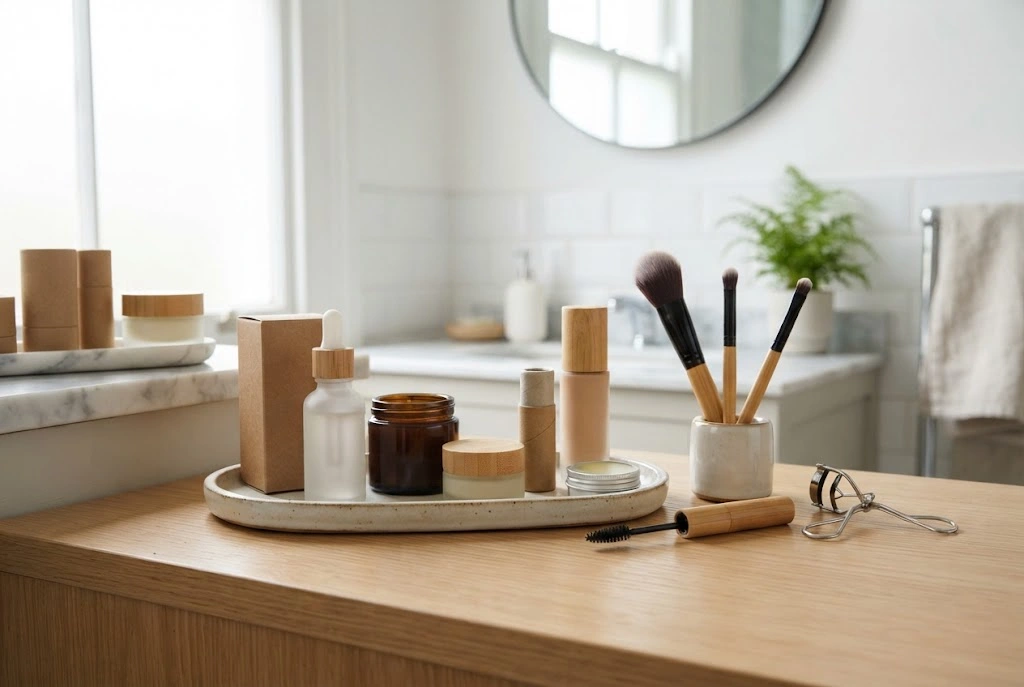
Is Beauty Pie vegan? It is an important question for shoppers who want to make more ethical beauty choices, but the answer needs some context. Beauty Pie currently labels a range of individual products as vegan, including its Everyday Great Skin Foundation, Unlipstick Modern Matte Lip Tint and several skincare products. However, consumers should check the vegan status of the specific product they plan to buy rather than automatically assuming that every item across the wider Beauty Pie catalogue has the same status.
Beauty Pie also states that it is cruelty-free. Its official information says the company does not test its products on animals, does not have laboratories test on its behalf and does not sell in territories where animal testing is required.
For shoppers, the distinction between vegan, cruelty-free and sustainable beauty is important. These terms describe different aspects of a product or brand, so understanding them can lead to more informed purchasing decisions.
Is Beauty Pie Vegan Across Its Entire Range?
The safest answer is to check the individual product rather than treating the whole Beauty Pie catalogue as automatically vegan.
Beauty Pie currently displays vegan labels on numerous products. For example, its Everyday Great Skin Foundation is listed as vegan and cruelty-free, while the Unlipstick Modern Matte Lip Tint is also specifically described as vegan and cruelty-free.
The brand also sells a wider range of products spanning skincare, makeup, bodycare, haircare, fragrance, accessories and supplements. Because the catalogue is broad, shoppers should review the product information for the exact item they are considering.
This is a useful habit with any beauty brand. Product ranges change, formulas can be updated and individual products can have different ingredient profiles. Checking the current product page is therefore more reliable than relying on a general assumption about an entire brand.
Is Beauty Pie Cruelty Free?
Yes. Beauty Pie states that it is cruelty-free and has always been so. The company’s published FAQ says its products are not tested on animals and that it does not sell in territories requiring animal testing.
Its current environmental, social and governance information also states that Beauty Pie is cruelty-free. The company says its new suppliers undergo due diligence that includes assessment of supply-chain ethics and commitment to its code of conduct.
For shoppers, this makes the cruelty-free claim relatively straightforward to assess because the brand has publicly stated its animal-testing position. However, cruelty-free and vegan should still be treated as separate questions.
What Is the Difference Between Vegan and Cruelty-Free Beauty?
Vegan beauty and cruelty-free beauty are related but they do not mean exactly the same thing.
A vegan product generally avoids animal-derived ingredients. A cruelty-free product, by contrast, refers primarily to animal testing. A product can therefore be cruelty-free without being vegan.
This distinction matters when shopping because a brand may have a cruelty-free policy while offering both vegan and non-vegan products.
For example, if a shopper’s priority is avoiding animal-derived ingredients, the word “cruelty-free” alone does not answer the question. The product’s vegan status needs to be checked separately.
Likewise, someone whose main concern is animal testing may prioritise a cruelty-free policy even when a particular product is not vegan.
How to Check Whether a Beauty Pie Product Is Vegan
The easiest starting point is the product’s current listing on the Beauty Pie website. Look for a specific vegan designation alongside the other product information.
Beauty Pie’s product pages commonly display key attributes beneath the product description. For instance, the current Everyday Great Skin Foundation page identifies the formula as vegan, fragrance-free, clean beauty and cruelty-free.
The Unlipstick Modern Matte Lip Tint is similarly marked as vegan and cruelty-free on its product page.
If a product does not display a vegan label, it is better to investigate further rather than assume that it qualifies. Consumers with strict dietary, ethical or ingredient requirements should also contact the brand directly if the available information is unclear.
Are Beauty Pie Products Sustainable?
Sustainable beauty is broader than vegan or cruelty-free beauty. A product can be vegan and cruelty-free while still raising questions about packaging, manufacturing, transportation or resource use.
Beauty Pie publishes environmental and social information describing several sustainability initiatives. The company says its packaging team is working towards more circular packaging and aims to reduce packaging, paperboard and virgin plastic use per product. It also says it is increasing the use of post-consumer recycled plastics year on year.
The company also reports a reduction in bulk airfreight by volume between April 2024–March 2025 and April 2025–March 2026, alongside an ongoing carbon-offsetting programme associated with last-mile package delivery.
These initiatives are relevant to shoppers interested in sustainable beauty brands, but sustainability should not be reduced to a single label. Consumers can consider several factors, including packaging, product longevity, sourcing, manufacturing and transport.
Why Vegan Does Not Automatically Mean Sustainable
It is easy to assume that a vegan product must also be environmentally friendly. In reality, the two concepts measure different things.
Vegan status primarily concerns animal-derived ingredients. Sustainability considers the broader environmental and social impact associated with producing, packaging, transporting and using a product.
A vegan formula can therefore still come in packaging that uses significant resources. Conversely, a product that is not vegan may still have characteristics that reduce certain environmental impacts.
This does not make vegan beauty less valuable. It simply means consumers should assess ethical claims according to the specific issue they care about.
If sustainability is a major consideration, look for concrete information rather than relying on the vegan label alone.
Beauty Pie Vegan Products Can Still Vary in Purpose
Another useful consideration is that vegan status tells you something about ingredients and sourcing, but it does not tell you whether a product is right for your routine.
For example, Beauty Pie currently labels its Everyday Great Skin Foundation as vegan and cruelty-free. It is a complexion product available in a broad shade range, so shoppers still need to consider shade, finish, coverage and personal preferences before buying.
Similarly, the brand’s Unlipstick Modern Matte Lip Tint is vegan and cruelty-free, but its purpose is different from that of a foundation or skincare product.
This is why ethical credentials should be considered alongside product performance and suitability rather than used as the only purchasing criterion.
Does Beauty Pie Have Vegan Skincare?
Yes, Beauty Pie currently lists vegan skincare products. One example is its Triple Hyaluronic Acid Moisturiser, which the brand describes as vegan and cruelty-free. The product is designed for dry, dehydrated and sensitive skin and is positioned around hydration and moisture support.
Beauty Pie also lists a vegan skincare and makeup introductory kit containing several products. Its current Beauty Icons kit is specifically marked as vegan.
These examples show why checking individual product pages is useful. Rather than asking only whether a brand is vegan, consumers can identify products that explicitly meet their requirements.
What About Vegan Makeup Tools?
Beauty shoppers sometimes forget that accessories can also be relevant when making ethical purchasing decisions.
Beauty Pie describes its makeup brushes as cruelty-free, vegan and synthetic. Its current range includes foundation, concealer, powder, eyeshadow and other brushes.
For consumers trying to build a more consistent vegan beauty collection, this can be useful because brush materials are separate from the ingredients in makeup itself.
However, as with cosmetic products, it is sensible to check the current product description before purchasing because ranges and specifications can change.
How to Assess Ethical Beauty Claims Before Buying
Consumers do not have to become experts in cosmetics to investigate ethical claims. A simple checklist can make the process much easier.
Look for specific product information
Check whether the individual product is explicitly labelled vegan or cruelty-free. Do not rely solely on general brand imagery or marketing language.
Separate vegan from cruelty-free
Decide which claim matters to you. Avoiding animal-derived ingredients and avoiding animal testing are different requirements.
Investigate sustainability separately
If environmental impact is important, look for information about packaging, sourcing, transportation and manufacturing rather than treating vegan status as proof of sustainability.
Check current information
Beauty formulas and ranges can change. Product pages and official brand policies are more useful than old social posts or outdated articles.
Consider the product itself
Ethical credentials do not make an unsuitable product a good purchase. Consider whether the item actually meets your needs, fits your routine and represents reasonable value.
This approach follows the broader principle covered in our guide on how to discover beauty: use marketing as a starting point, then investigate the information behind the claim.
How Beauty Pie Fits Into Sustainable Beauty Shopping
Consumers interested in sustainable beauty brands are increasingly looking at several dimensions of a company’s behaviour rather than focusing on one label.
Beauty Pie’s published ESG information provides details about its packaging ambitions, supplier due diligence, airfreight reduction and other environmental initiatives.
That does not mean every sustainability question is automatically resolved. Responsible shopping involves recognising what a brand publicly commits to, what evidence it provides and which areas remain more difficult to assess.
For consumers, this can lead to more realistic purchasing decisions. Instead of searching for a “perfect” ethical beauty brand, shoppers can identify the issues that matter most to them and compare brands accordingly.
Is Beauty Pie Vegan? The Practical Answer
So, is Beauty Pie vegan? The most accurate consumer-friendly answer is that Beauty Pie currently offers many products explicitly labelled vegan, but shoppers should verify the status of the individual product they want to purchase rather than assuming the entire catalogue is vegan.
Beauty Pie states that it is cruelty-free, and its official product listings show vegan and cruelty-free credentials on a range of skincare, makeup and accessories.
For shoppers concerned about sustainable beauty, the vegan label should be considered alongside packaging, sourcing, manufacturing and other environmental factors. The strongest buying decision is one based on the specific product, the claim that matters to you and the evidence the brand provides.
Ultimately, ethical beauty shopping is less about accepting a single label and more about asking better questions. Check the product, understand the claim and compare the information before buying. That approach can help UK consumers make beauty purchases that better reflect their personal values without losing sight of quality, suitability and value.
