

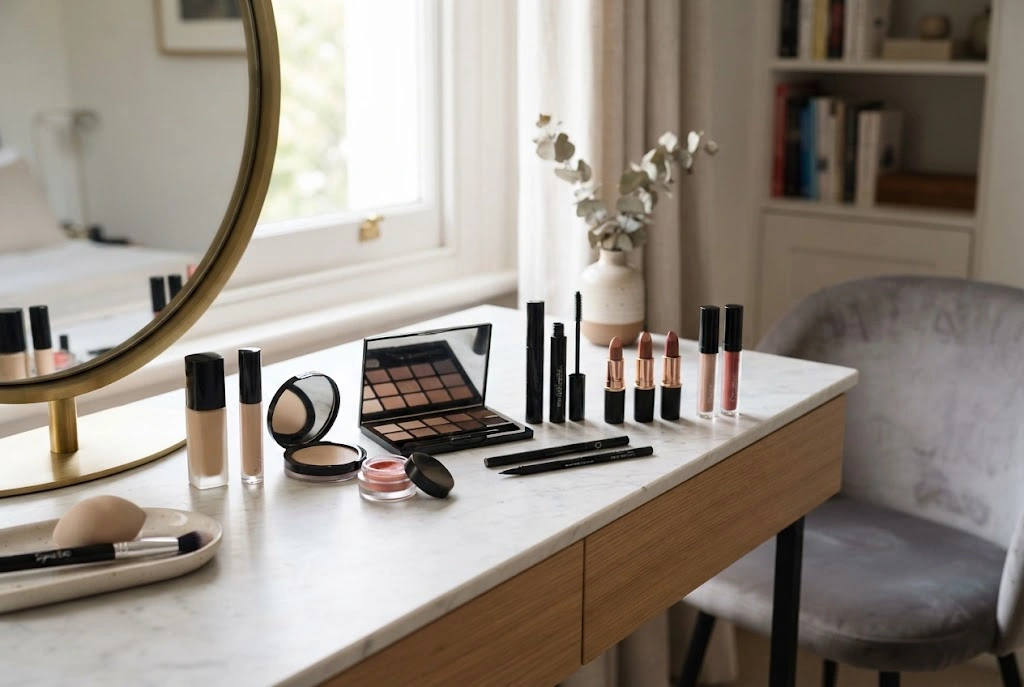
Understanding the different types of cosmetics can make beauty shopping much easier. From foundation and concealer to lipstick, mascara and setting products, each category has a different purpose. Yet with hundreds of products available across UK retailers, it is easy to buy something without fully understanding what it is designed to do.
Whether you are new to makeup or simply want to build a more practical beauty collection, knowing what cosmetics are for can help you compare products, avoid unnecessary purchases and choose items that fit your routine. This guide explains the main cosmetic categories in straightforward terms, with a focus on making better buying decisions.
What Are Cosmetics?
Cosmetics are products used to cleanse, beautify, enhance appearance or change the way certain features look. The category includes makeup as well as a much wider range of beauty and personal-care products.
Makeup is therefore one part of the broader cosmetics category. Foundation, blush, mascara and lipstick are cosmetics, while products such as certain skincare, hair and personal-care formulations can also fall within the wider cosmetic industry.
The exact regulatory definition can vary depending on the product and jurisdiction. In the UK, businesses placing cosmetic products on the market must comply with specific cosmetic product rules, including requirements around safety and responsible persons.
For shoppers, the important distinction is practical: not every cosmetic is makeup, and not every beauty product has the same purpose.
Types of Cosmetics Explained
The easiest way to understand cosmetics is to divide them into categories based on what they do. While individual products can serve more than one purpose, the following groups cover many of the products shoppers encounter regularly.
Foundation
Foundation is used to create a more even-looking complexion and provide varying levels of coverage. Depending on the formula, it can have a matte, natural, satin or dewy finish.
When choosing foundation, shoppers should consider shade, skin type, desired coverage and finish. A product with excellent reviews is not automatically suitable if the shade or finish does not match your preferences.
Concealer
Concealer is generally used for more targeted coverage. Consumers may use it around the eyes or on areas where they want additional coverage.
Some concealers are lightweight and designed for everyday use, while others provide fuller coverage. The right choice depends on what you want the product to achieve.
Powder
Face powder can help reduce visible shine and set certain makeup products. Loose and pressed powders offer different formats, so shoppers should consider which is easier to use and carry.
Powder is particularly useful for consumers who want to control shine, but applying too much can affect the appearance of other makeup.
Blush
Blush adds colour to the cheeks and can create a more defined or refreshed appearance. It is available in powder, cream and liquid formats.
The choice between formulas often comes down to application preference and the overall finish you want.
Bronzer
Bronzer is commonly used to add warmth to the appearance of the complexion. It can be applied to selected areas of the face to create a more sun-kissed effect.
Consumers should distinguish bronzer from contour products. Although both can influence the appearance of facial definition, they are generally intended to create different visual effects.
Highlighter
Highlighter is designed to draw attention to selected areas by adding light-reflecting or luminous finish. It may be available as a powder, cream or liquid.
Because highlighter is often highly visible, a small amount can be enough. Buying a large number of similar highlighting products may therefore be unnecessary for a simple routine.
Different Categories of Makeup for the Eyes
Eye makeup includes several distinct product categories, each serving a particular purpose. Understanding these differences makes it easier to decide what you actually need.
Eyeshadow
Eyeshadow adds colour or dimension to the eyelids. Palettes can contain several shades, while individual products may be better for consumers who prefer a simpler collection.
If you rarely change your makeup style, buying a large palette simply because it contains many shades may not represent good value.
Eyeliner
Eyeliner is used to define the appearance of the eyes. Pencil, liquid and gel formulas can produce different effects and require different application techniques.
Mascara
Mascara is applied to the eyelashes to enhance their appearance. Different formulas can focus on effects such as length, volume or definition.
When shopping for mascara, consider the result you actually want rather than choosing a product solely because it is currently popular.
Eyebrow Products
Eyebrow pencils, gels, powders and other products can help define or fill the appearance of brows. The best format depends on the desired finish and how much control you want during application.
Lip Makeup Categories
Lip products range from subtle everyday formulas to highly pigmented options designed for more dramatic looks.
Lipstick
Lipstick adds colour to the lips and comes in finishes including matte, satin, cream and glossy styles. Shade and comfort are often just as important as pigmentation.
Lip Gloss
Lip gloss is primarily associated with a shiny finish. Some modern glosses also include conditioning ingredients, although their main purpose remains cosmetic.
Lip Liner
Lip liner can define the outline of the lips and help create a more precise makeup look. It can also be used alongside lipstick or gloss.
For shoppers building a basic collection, lip liner is optional rather than an essential purchase.
What About Makeup Primers and Setting Products?
Primers and setting products are designed to support the application or wear of makeup. Their roles can overlap with other parts of a routine, which is why they are worth evaluating carefully.
Primer
Primer is generally applied before makeup. Different formulations are marketed around goals such as smoothing, hydration or controlling shine.
Whether you need a primer depends on your skin, makeup routine and personal preference. It should not be considered mandatory for every makeup user.
Setting Spray
Setting sprays are designed to be applied after makeup and can help influence the final finish or wear of a look, depending on the formulation.
As with primer, shoppers should consider whether the product provides a meaningful benefit for their routine before adding it to their basket.
Another Word for Cosmetics: Beauty Products, Makeup and More
People sometimes search for another word for cosmetics because the terminology can be confusing. Depending on the context, terms such as beauty products, personal-care products, makeup or beauty items may be used.
However, these terms are not always exact synonyms. “Makeup” generally refers to products used to alter or enhance appearance, while “cosmetics” can cover a broader range of products.
Understanding this distinction is useful when searching online because retailers may organise their websites differently. One retailer might place skincare and makeup under beauty, while another may separate cosmetics into several product categories.
What Are Cosmetics Used For?
Cosmetics can serve several purposes, from enhancing appearance to providing colour, texture or a particular finish.
- Complexion: Foundation, concealer and powder can alter the appearance of skin tone and coverage.
- Cheeks: Blush, bronzer and highlighter can add colour, warmth or definition.
- Eyes: Mascara, eyeliner and eyeshadow can enhance eye definition.
- Lips: Lipstick, gloss and liner can add colour, shine and definition.
- Overall finish: Primers and setting products can influence how makeup applies or looks.
Knowing the purpose of each category helps consumers avoid buying products that duplicate the same function.
Cosmetically Enhanced Does Not Mean Better
Beauty marketing often focuses on transformation. Images may show dramatic differences between a bare face and a fully made-up look. However, shoppers should remember that cosmetics are tools rather than guarantees of a particular appearance.
A product can be technically well made while still being unsuitable for your preferences. Similarly, a simple and affordable product may provide everything you need.
This is why product discovery should start with your own requirements. As explained in our guide on how to discover beauty, consumers can benefit from looking beyond marketing claims and investigating whether a product offers genuine value.
How to Choose Between Cosmetic Categories
The best way to choose cosmetics is to build your collection around actual use.
Start with your routine
Think about what you currently use and what is missing. If you already have several complexion products, another foundation may not add much value.
Choose products with clear purposes
Every item should have a reason for being in your makeup bag. This makes it easier to control spending and avoid clutter.
Compare formulas
Products within the same category can behave very differently. Consider finish, application method, ingredients, shade range and expected use.
Read reviews carefully
Reviews can help identify practical strengths and weaknesses. Look for information about application, durability, texture and whether the product performs as expected.
Consider value rather than price alone
A cheap product is not necessarily good value if you never use it. Likewise, an expensive product may be worthwhile if it becomes a dependable part of your routine. The useful question is whether the product earns its place.
How Cosmetic Categories Fit Into Modern Beauty Shopping
Online beauty shopping has made product choice easier in some ways and more complicated in others. Consumers can now access detailed product information, customer reviews and recommendations from a wide range of sources.
That makes category knowledge increasingly useful. Once you understand what a concealer, primer, serum or setting product is designed to do, you can make more meaningful comparisons.
The same principle applies when comparing accessible UK beauty brands. Our guide to Boots INKEY List products looks more closely at ingredient-led skincare and how shoppers can assess value when choosing individual products.
Consumers can also explore the wider Beauty category for additional guides and buying advice.
Building a Practical Cosmetic Collection
You do not need every category to create an effective makeup collection. A practical starting point might include products that address your most common needs, followed by optional items for different occasions.
For some people, that may mean a lightweight base, concealer, mascara, blush and lip product. Others may prefer a larger collection with multiple eyeshadows, liners and complexion products.
There is no universally correct number of cosmetics to own. The better measure is how often you use the products and whether they provide something useful.
As your preferences develop, you can add products gradually. This makes it easier to identify what works and prevents your beauty shopping from becoming a collection of unused products.
Final Guide to the Types of Cosmetics
Understanding the types of cosmetics gives shoppers a stronger foundation for making purchasing decisions. Rather than treating makeup as one large category, you can look at each product according to its purpose, formulation and place within your routine.
Foundation, concealer, powder, blush, bronzer and highlighter focus on the complexion. Eyeshadow, eyeliner, mascara and brow products focus on the eyes. Lipstick, gloss and liner provide options for the lips, while primers and setting products support the overall makeup process.
The smartest approach is not to buy every category. Instead, identify what you need, compare suitable options and choose products that provide genuine value.
As beauty shopping continues to become more research-driven, understanding product categories can help consumers spend more confidently. The goal is simple: buy less blindly, compare more intelligently and choose cosmetics that genuinely work for the way you use them.
