

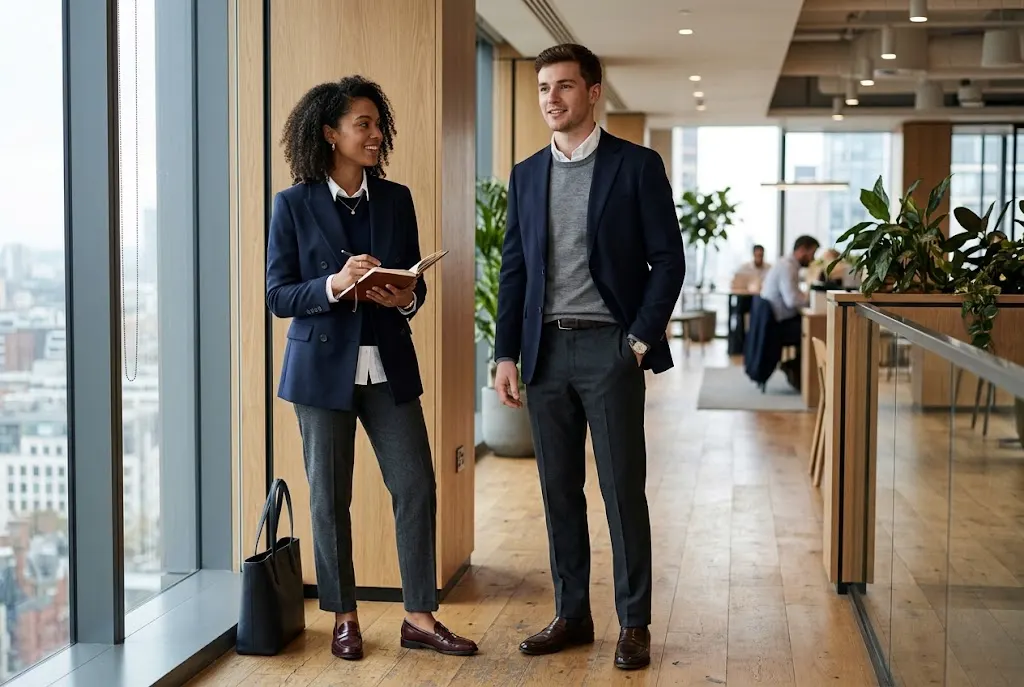
Knowing what to wear to a job interview can be almost as stressful as preparing for the interview itself. You want to look professional, feel comfortable and make a positive first impression without wearing something that feels completely unnatural.
There is no single interview outfit that works for every job. A law firm, creative agency, retail role, technology company and hospitality business may all have very different expectations.
The safest approach is to understand the workplace, consider the role and choose clean, well-fitting clothing that is slightly more polished than your normal day-to-day workwear.
How to Choose What to Wear to a Job Interview
Before choosing your outfit, consider these five factors:
- The industry you are applying to
- The company’s usual dress code
- The seniority and responsibilities of the role
- Whether the interview is in person or online
- The weather and practical requirements of the day
If you are unsure about the dress code, it is usually better to look neat and professional than excessively casual.
However, professional does not necessarily mean wearing a traditional suit. Many modern workplaces use business-casual or smart-casual clothing.
Our guide to smart casual outfits explains how to balance polished and relaxed pieces.
What Is the Safest Interview Outfit?
A simple, coordinated outfit in neutral colours is usually a reliable starting point.
For a more formal workplace, this might mean:
- A suit or tailored jacket
- A smart shirt or blouse
- Tailored trousers or a suitable skirt
- Smart shoes
For a business-casual workplace, you might choose:
- A blazer or structured jacket
- A plain shirt, blouse, polo or fine knit
- Chinos or tailored trousers
- Loafers, smart flats, boots or clean minimalist trainers where appropriate
The aim is to look prepared for the role rather than dressed for a completely different environment.
What to Wear to a Formal Job Interview
Some industries and organisations continue to expect a more traditional professional appearance.
For formal interviews, a suit or similarly polished combination may be appropriate. Choose understated colours such as navy, charcoal, grey or black if you want a conservative appearance.
Make sure the clothing fits comfortably. A poorly fitting suit will not look professional simply because it is formal.
For Men
A traditional formal interview outfit could include:
- A well-fitting suit
- A plain or subtly patterned shirt
- A conservative tie where appropriate
- Smart leather shoes
- A belt that works with the shoes
For Women
Options include:
- A tailored suit
- Blazer with tailored trousers
- Blazer with a suitable skirt
- A professional dress with a structured jacket
- Smart blouse or knitwear
- Smart flats, loafers or appropriate heels
There is no requirement to wear heels to look professional. Choose footwear that allows you to walk and stand comfortably.
What to Wear to a Business-Casual Interview
Business casual gives you more flexibility, but it still requires careful coordination.
For example, you could wear a blazer with chinos or tailored trousers, combined with a simple shirt or fine knit.
For women, tailored trousers with a blouse or knit, a smart dress with a blazer, or a polished skirt-and-top combination can work well.
The key is to avoid making the outfit look too relaxed. Very distressed denim, visibly worn trainers, slogan clothing and sportswear may be inappropriate unless the company specifically embraces that style.
What to Wear to a Creative Job Interview
Creative workplaces may have a more relaxed dress code, particularly in areas such as design, media, marketing, fashion and some technology businesses.
This does not mean you should ignore presentation.
A creative interview can be a good opportunity to show some personality through:
- Colour
- Texture
- Accessories
- Interesting but understated footwear
- A distinctive jacket or blazer
Keep the overall outfit polished. One or two personal details are usually more effective than trying to make every part of the outfit a statement.
What to Wear to a Retail or Customer-Facing Interview
For retail, hospitality and other customer-facing roles, presentation can be particularly important because the job may involve representing a brand or interacting directly with customers.
A neat smart-casual outfit is often a useful starting point unless the employer has specified something different.
Consider:
- Clean, well-fitting trousers or smart jeans where appropriate
- A shirt, blouse, polo or polished top
- A blazer or structured jacket
- Clean and presentable footwear
If you are interviewing with a fashion retailer, researching the company’s current visual identity and typical staff styling can also help you understand the expected level of formality.
What to Wear to an Office Interview
Office environments vary considerably, so do not assume that every office requires a suit.
If you can, look at the company’s website, social channels or other publicly available information to get a sense of its workplace culture.
A blazer can be particularly useful because it gives you flexibility. You can combine it with tailored trousers for a smarter look or dress it down slightly with chinos or appropriate jeans.
For more blazer combinations, see our guide on how to style a blazer for casual and smart outfits.
What Colours Should You Wear to an Interview?
Neutral colours are generally easy to coordinate and tend to create a polished appearance.
Useful choices include:
- Navy
- Charcoal
- Grey
- Black
- White
- Cream
- Beige
- Muted blue
You can introduce colour through a blouse, shirt, knitwear, tie, scarf, jewellery or another accessory.
You do not have to avoid colour completely. The important thing is that the outfit looks intentional and appropriate for the workplace.
What Shoes Should You Wear to a Job Interview?
Your shoes should be clean, comfortable and suitable for the level of formality.
Possible choices include:
- Loafers
- Derby shoes
- Oxford shoes
- Smart flats
- Ankle boots
- Simple heels
- Clean minimalist trainers in suitable workplaces
Do not wear brand-new shoes that you have never tested. An interview is a poor time to discover that your footwear causes discomfort.
If you need to walk from a station or car park, factor that into your choice as well.
What to Wear to an Interview in Winter
UK winter weather can make interview dressing more complicated. You may need to stay warm outside without arriving at the interview looking overly bundled up.
A practical combination could include:
- Smart trousers or a suitable skirt
- Shirt, blouse or fine knit
- Blazer or structured jacket
- Warm coat
- Smart boots
Choose a coat that complements rather than clashes with the rest of the outfit. If you need to remove it when you arrive, the clothes underneath should still look complete.
What to Wear to an Interview in Summer
Warm weather does not mean you have to sacrifice professionalism.
Choose breathable fabrics and lighter colours where appropriate. Linen blends, lightweight cotton and other breathable materials can help you stay comfortable.
Avoid clothing that becomes visibly creased or uncomfortable during travel if you know you have a long journey to the interview.
Keep the expected workplace dress code in mind when choosing shorter hemlines, open footwear or sleeveless clothing.
What to Wear to an Online Job Interview
Online interviews require a slightly different approach because the interviewer may only see your upper body.
Even though you are at home, treat the interview seriously.
Wear a complete outfit rather than only dressing the visible part of your body. This can help you feel more prepared and avoids problems if you need to stand up unexpectedly.
For the visible area, choose clothing that contrasts sufficiently with your background and does not create distracting patterns on camera.
Also check your lighting and camera position before the interview.
Should You Wear a Blazer to an Interview?
A blazer can be an excellent choice when you want to look polished without necessarily wearing a complete suit.
It can be combined with:
- Tailored trousers
- Chinos
- Smart jeans where appropriate
- A blouse
- A shirt
- A fine knit
A neutral blazer is particularly useful because you can reuse it for work, dinners and other occasions.
Can You Wear Jeans to a Job Interview?
Sometimes, but it depends heavily on the workplace.
For a traditional professional environment, jeans may be too casual. For a creative, technology or relaxed workplace, smart dark jeans may be perfectly acceptable.
If you choose jeans, avoid distressed denim, excessive fading or visibly worn styles unless they genuinely fit the company’s dress culture.
A dark, clean pair of jeans with a blazer, smart shirt and polished footwear can create a more professional appearance than jeans worn with casual sportswear.
Our guide on how to style jeans includes more ways to balance denim with smarter pieces.
How Should Your Clothes Fit?
Fit is one of the most important parts of an interview outfit.
Your clothes should allow you to move naturally without looking excessively loose or restrictive.
Check:
- Shoulders sit correctly on jackets and blazers.
- Trousers do not pull or bunch excessively.
- Shirts and tops allow comfortable movement.
- Sleeves are an appropriate length.
- Skirts and dresses allow you to sit comfortably.
- Nothing requires constant adjustment.
Comfort matters because you want to concentrate on the interview rather than your clothing.
Grooming and Presentation
Your outfit is only one part of your overall presentation.
Before the interview, check that:
- Your clothes are clean and reasonably crease-free.
- Your shoes are clean.
- Your hair is neat in a way that suits your normal style.
- Your bag or briefcase is presentable.
- Accessories are appropriate for the workplace.
You do not need to completely change your appearance. The goal is simply to arrive looking prepared and professional.
What Bag Should You Take to an Interview?
A simple structured bag, laptop bag, briefcase or professional backpack can work depending on the workplace.
Choose something large enough for anything you genuinely need, such as:
- A CV or printed documents if required
- Notebook
- Pen
- Laptop or tablet if requested
- Phone and charger
Avoid carrying unnecessary items simply because you think they make you look more professional.
How to Prepare Your Interview Outfit the Night Before
Preparing your outfit in advance can remove unnecessary stress on the morning of the interview.
Check everything the night before:
- Choose the complete outfit.
- Check the clothing for stains or damage.
- Iron or steam anything that needs attention.
- Clean your shoes.
- Check that all fastenings work.
- Prepare suitable outerwear for the weather.
- Pack your bag.
This also gives you time to change something if an item does not work as expected.
Should You Buy New Clothes for an Interview?
You do not necessarily need to buy anything.
If your existing wardrobe contains well-fitting professional clothing, use it. A polished outfit that you already feel comfortable wearing can be better than a completely new outfit that makes you feel self-conscious.
If you do need something new, prioritise versatile pieces that you can continue wearing after the interview.
A neutral blazer, tailored trousers, smart shirt or versatile shoes can become useful additions to your wider wardrobe rather than one-time purchases.
This is the same principle behind building a versatile wardrobe.
Common Interview Outfit Mistakes
Ignoring the Company Dress Code
Turning up in a suit when the entire workplace is extremely casual is not necessarily a problem, but it may make you feel uncomfortable. Conversely, being too casual in a formal workplace can create the wrong impression.
Wearing Uncomfortable Shoes
You may need to walk, stand or travel before the interview. Comfort matters.
Wearing Something You Have Never Tested
Check new clothes and shoes before interview day so you know how they fit and feel.
Overdoing Accessories
Accessories should complement your outfit rather than distract from you.
Choosing Fashion Over Suitability
An interview is not always the right occasion to experiment with a dramatic trend. Personal style is valuable, but it should still fit the workplace.
Forgetting the Weather
Rain, heat or cold can affect your appearance and comfort. Check the forecast and plan accordingly.
Interview Outfit Checklist
- Is the outfit appropriate for the industry?
- Does it match the likely workplace dress code?
- Does everything fit comfortably?
- Are the clothes clean and presentable?
- Are your shoes suitable and comfortable?
- Have you checked the weather?
- Is your outerwear appropriate?
- Is your bag practical and professional?
- Do you still feel like yourself?
If you can answer yes to these questions, your outfit is likely doing its job.
Frequently Asked Questions
What is the best colour to wear to a job interview?
Navy, grey, charcoal, black, white and other neutral colours are easy to coordinate and can create a polished appearance. You can also use subtle colour to reflect your personal style.
Can I wear jeans to an interview?
It depends on the workplace. Jeans may be appropriate for some creative or relaxed workplaces but can be too casual for traditional professional environments.
Should I wear a suit to every job interview?
No. The appropriate level of formality depends on the industry, company and role. Some workplaces expect traditional businesswear, while others favour smart casual or business casual.
Can I wear trainers to a job interview?
Clean, understated trainers can work in some relaxed workplaces, but formal industries generally call for smarter footwear.
Is a blazer appropriate for a job interview?
Yes. A blazer can be a versatile option for many business-casual and smart-casual interviews. It can also be paired with tailored trousers for a more formal appearance.
What should I wear to an online interview?
Wear a complete, professional outfit rather than only dressing the visible part of your body. Choose clothing that looks good on camera and does not create distracting patterns.
Should I buy a new outfit for an interview?
Not necessarily. Existing clothes can work perfectly well if they are clean, comfortable, well-fitting and appropriate for the workplace.
Final Thoughts
When deciding what to wear to a job interview, the goal is not to create the most fashionable outfit possible. It is to look prepared, professional and comfortable while fitting the expectations of the workplace.
Start by researching the company and understanding the likely dress code. Then build your outfit around well-fitting, versatile pieces such as tailored trousers, a smart shirt, polished footwear and, where appropriate, a blazer.
A good interview outfit should give you confidence without demanding your attention. Once your clothes are sorted, you can focus on what really matters: showing the employer what you can bring to the role.
