

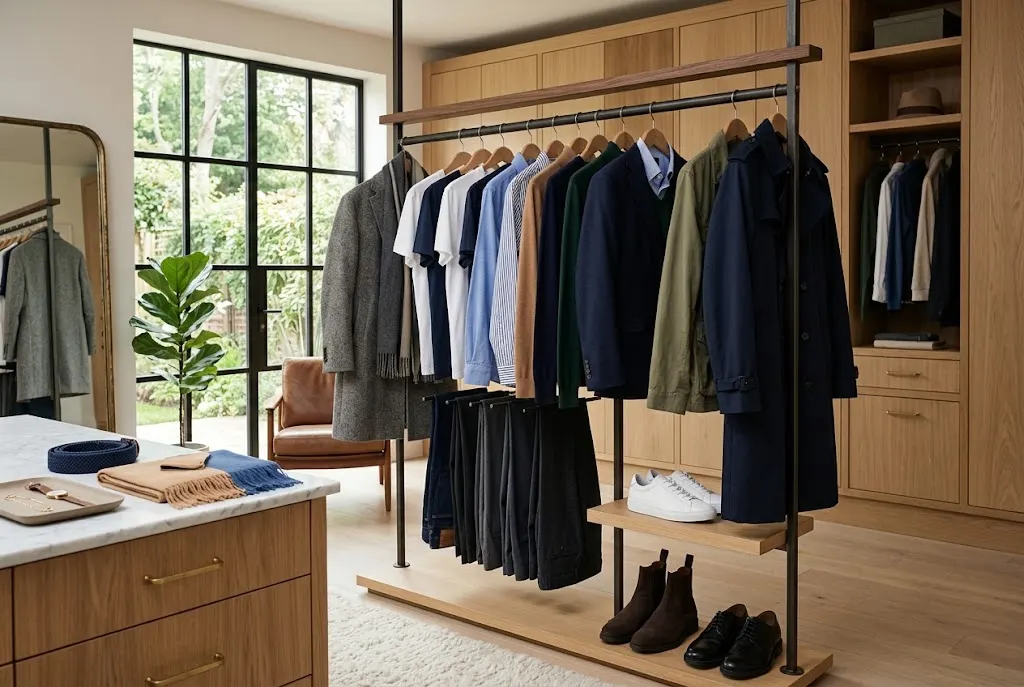
Building a versatile wardrobe means having clothes that can work across different occasions, temperatures and combinations without constantly needing to buy something new. This is particularly useful in the UK, where changing weather can make dressing for the day less predictable.
A versatile wardrobe does not have to be large. The aim is to choose pieces that work together, layer easily and can be adapted throughout the year.
Whether you are starting from scratch, reducing your wardrobe or simply trying to make better use of your existing clothes, a thoughtful approach can make everyday dressing much easier.
What Is a Versatile Wardrobe?
A versatile wardrobe is a collection of clothing where individual pieces can be worn in multiple ways and across different situations.
For example, one blazer might work with jeans for a smart-casual outfit, tailored trousers for work or a dress for an evening occasion.
Similarly, a fine-knit jumper can be worn with denim in autumn, layered over a shirt during winter and used as a lightweight layer during cooler spring days.
The more combinations you can create from your existing clothing, the more versatile your wardrobe becomes.
Why Build a Versatile Wardrobe?
A versatile wardrobe can make your daily routine simpler while helping you shop more intentionally.
Some of the main benefits include:
- More outfit combinations
- Less unnecessary shopping
- Easier morning decisions
- Better use of existing clothes
- Greater flexibility between seasons
- More practical packing for travel
- Lower risk of buying items you rarely wear
It can also help you develop a clearer personal style because you begin to understand which colours, silhouettes and pieces you actually use.
Start With Your Lifestyle
The most versatile wardrobe is not the same for everyone.
Before buying anything, consider how you spend most of your time.
Ask yourself:
- Do I work in an office or remotely?
- How often do I attend formal events?
- Do I travel frequently?
- How much time do I spend outdoors?
- Do I prefer casual or smart clothing?
- What type of weather do I normally dress for?
- Which clothes do I wear most often?
Your answers should determine what you prioritise.
There is little benefit in owning several formal suits if most of your lifestyle is casual. Likewise, someone who works in a traditional office may need more professional clothing than someone who works from home.
Build a Neutral Foundation
Neutral colours are useful because they are generally easy to combine.
Common options include:
- Black
- White
- Navy
- Grey
- Beige
- Cream
- Brown
- Olive
You do not need to build your entire wardrobe around neutrals. Instead, use them as a foundation and add colours that reflect your personality.
A coordinated colour palette means you can often combine more of your wardrobe without having to think too much about whether pieces match.
Choose Versatile Basics
Basics provide the foundation for everyday outfits.
Depending on your lifestyle, useful basics can include:
- Plain T-shirts
- Jeans
- Tailored trousers
- Chinos
- Shirts and blouses
- Fine-knit jumpers
- Cardigans
- Simple skirts or dresses
Choose the styles you will actually wear. There is no requirement to own every category.
For a more detailed look at building a smaller, coordinated wardrobe, see our guide to creating a capsule wardrobe.
Invest in Good Layering Pieces
Layering is one of the most effective ways to make a wardrobe work across multiple seasons.
Useful layers can include:
- Lightweight shirts
- Overshirts
- Cardigans
- Fine-knit jumpers
- Blazers
- Lightweight jackets
- Coats
Layers allow you to adjust your outfit as the temperature changes.
For example, a T-shirt may be enough on a mild day, while adding an overshirt and coat can make the same base suitable for colder weather.
How to Build a Wardrobe for Spring
Spring is a transitional season, so flexible layers are particularly useful.
Start with lightweight foundations and add pieces that can be removed throughout the day.
Useful spring clothing might include:
- Plain T-shirts
- Lightweight shirts
- Fine-knit jumpers
- Jeans
- Tailored trousers
- Lightweight jackets
- Trainers or other transitional footwear
A lightweight waterproof layer can also be practical for unpredictable British weather.
How to Build a Wardrobe for Summer
Summer wardrobes benefit from breathable fabrics and clothing that can handle warmer temperatures.
Depending on your lifestyle, consider:
- Lightweight T-shirts
- Breathable shirts
- Summer dresses
- Skirts
- Lightweight trousers
- Suitable shorts
- Comfortable warm-weather footwear
Keep at least one lightweight layer available because UK summer evenings can be cooler than expected.
How to Build a Wardrobe for Autumn
Autumn is ideal for layering.
Bring knitwear, jackets and boots into your regular rotation while continuing to use lighter pieces underneath.
Useful autumn combinations include:
- T-shirt with overshirt
- Shirt with fine-knit jumper
- Jeans with boots and a jacket
- Tailored trousers with knitwear
- Dress with cardigan and ankle boots
Autumn also provides an opportunity to introduce richer colours and heavier textures.
How to Build a Wardrobe for Winter
Winter requires greater attention to warmth, layering and practical outerwear.
Key categories can include:
- Warm coats
- Heavy knitwear
- Thermal base layers where appropriate
- Long-sleeved tops
- Warm trousers
- Boots
- Scarves
- Gloves
Rather than relying on one extremely heavy layer, combining several suitable layers can provide greater flexibility.
Choose a Versatile Coat
A coat is often one of the most visible pieces in a UK wardrobe, so versatility is particularly valuable.
Depending on your needs, you might consider:
- A tailored wool coat
- A trench coat
- A waterproof coat
- A padded winter coat
- A practical everyday jacket
If you want one outer layer to cover several situations, choose a style that works with both casual and smart clothing.
Choose Shoes That Work Across Outfits
Footwear can either increase or reduce the versatility of a wardrobe.
Instead of buying shoes for every individual outfit, look for pairs that work across multiple categories.
A practical collection might include:
- Clean everyday trainers
- Smart casual footwear
- Boots for colder weather
- Optional formal shoes
- Seasonal footwear where genuinely needed
Comfort should be part of the decision. Shoes that look good but are too uncomfortable to wear regularly are unlikely to provide much value.
Use Accessories to Change Your Outfits
Accessories can make the same clothing combination look different without requiring new garments.
Consider:
- Belts
- Watches
- Jewellery
- Scarves
- Handbags
- Backpacks
- Hats
- Sunglasses
You can use accessories to introduce colour, texture or personality while keeping your core clothing relatively simple.
Create Outfits Instead of Buying Outfits
One of the biggest changes you can make is to stop thinking of clothing as complete outfits.
Instead, think of individual pieces and how they interact.
For example, a blazer should not only be “the blazer you wear with those trousers”. It should potentially work with jeans, skirts, dresses, chinos and other trousers.
This mindset increases the number of combinations available from the same wardrobe.
Use the Three-Outfit Test
Before buying a new item, try to think of at least three outfits you could create with it using clothes you already own.
For example, if you are considering a new jumper, ask whether you could wear it with:
- Jeans
- Tailored trousers
- A skirt
If you can only imagine wearing it with one specific outfit, it may not be the most versatile purchase.
This is not an absolute rule, but it can be a useful way to reduce impulse buying.
Choose Fabrics Carefully
Fabric affects comfort, appearance, warmth and how often you can use an item.
For a versatile wardrobe, consider fabrics appropriate to your climate and lifestyle.
Lightweight materials can be useful for warmer seasons, while wool and heavier knits can provide warmth during winter.
Also consider maintenance. A garment that requires complicated care may be less practical for everyday use than an equally attractive item that is easier to maintain.
Build a Smart-Casual Foundation
Smart casual is particularly useful because it can cover many situations between formal workwear and relaxed everyday clothing.
A versatile foundation could include:
- Dark jeans
- Chinos or tailored trousers
- Plain T-shirts
- Smart shirts
- Fine-knit jumpers
- A blazer
- Clean trainers
- Loafers or smart shoes
These pieces can be combined differently depending on the occasion.
For more detailed advice, read our guide to smart casual outfits.
Make Your Wardrobe Work for Work
If you work in an office, choose clothing that can move between different levels of formality.
For example, a blazer can be worn with tailored trousers for a formal meeting and with jeans for a more relaxed day.
A shirt can work under a blazer, with chinos or with jeans.
This gives you flexibility without needing a separate wardrobe for every working situation.
Make Your Wardrobe Work for Weekends
Weekend clothing should prioritise comfort, but that does not mean everything needs to be sportswear.
Jeans, knitwear, plain T-shirts, overshirts, casual jackets and clean trainers can create a wide variety of relaxed outfits.
Keep a few pieces that can be quickly elevated if you decide to go for an unplanned lunch, dinner or social event.
Make Your Wardrobe Work for Special Occasions
It is useful to have a small number of pieces that can handle more formal occasions.
Depending on your lifestyle, this could include:
- A well-fitted suit
- A versatile formal dress
- A smart blazer
- Tailored trousers
- Formal shoes
- A polished coat
Choose pieces that can be restyled whenever possible.
For example, the same blazer can be used for work, dinners and less formal celebrations.
How to Make a Small Wardrobe More Versatile
If you have limited storage or simply prefer owning fewer clothes, concentrate on compatibility.
Try to make sure that most of your main pieces work with several others.
A small wardrobe might contain:
- Two or three pairs of versatile trousers or jeans
- Several simple tops
- Two or three layering pieces
- One smart jacket
- One practical coat
- A few pairs of suitable shoes
- A small selection of accessories
The exact number is less important than how effectively the pieces work together.
How to Make a Large Wardrobe More Useful
Having many clothes does not automatically create versatility.
If your wardrobe is large but you repeatedly wear the same small group of items, identify why the others are being ignored.
You may discover that some pieces:
- Do not fit properly
- Are difficult to combine
- Are uncomfortable
- Do not suit your current lifestyle
- Are reserved for occasions that rarely happen
Removing or reorganising such items can make the useful part of your wardrobe easier to access.
Review Your Wardrobe Each Season
At the beginning of each season, spend a little time reviewing what you have.
Ask:
- What did I wear most last season?
- What did I never wear?
- What needs repairing?
- What no longer fits?
- What genuine gaps do I have?
This helps you make deliberate purchases rather than automatically buying new clothes whenever a season changes.
How to Shop More Intentionally
Before purchasing something, consider its role in your wardrobe.
Ask whether it:
- Works with your existing colours
- Fits your lifestyle
- Can be worn in multiple seasons
- Can be dressed up or down
- Feels comfortable
- Fills a genuine gap
Think about value rather than simply price. A reasonably priced item that becomes one of your most frequently worn pieces may provide more value than an expensive item worn once.
Do Not Confuse Versatility With Boring
A versatile wardrobe does not need to consist entirely of neutral basics.
You can still include:
- Statement jackets
- Bold colours
- Patterns
- Distinctive accessories
- Seasonal trends
- Unique footwear
The difference is that your statement pieces sit alongside a reliable foundation rather than making up your entire wardrobe.
This gives you room to experiment without making every outfit difficult to coordinate.
How to Make Your Wardrobe More Comfortable
Comfort should be part of versatility.
If you cannot comfortably wear an item for several hours, it may not become a genuinely useful wardrobe piece.
Consider:
- Fabric feel
- Garment weight
- Waistband comfort
- Footwear support
- Freedom of movement
- Temperature suitability
A stylish wardrobe is more useful when the clothing works with your everyday routine rather than making ordinary activities unnecessarily difficult.
Our guide on looking stylish and feeling comfortable for any occasion covers this balance in more detail.
Common Mistakes When Building a Versatile Wardrobe
Buying Too Many Trend Pieces
Trends can add personality, but too many trend-led purchases can make your wardrobe difficult to coordinate.
Ignoring Your Actual Lifestyle
Build around the situations you genuinely encounter rather than the lifestyle you imagine you might have one day.
Choosing Clothing That Only Works Together
If a jacket, top or pair of trousers can only be worn with one other item, it may not provide much flexibility.
Forgetting Outerwear
In the UK, coats and jackets are often worn for a significant part of the year. Make sure your outerwear works with the majority of your wardrobe.
Prioritising Appearance Over Comfort
Clothing that looks excellent but feels uncomfortable may spend most of its time hanging in the wardrobe.
A Simple Versatile Wardrobe Checklist
When reviewing your wardrobe, aim to have suitable options for:
- Everyday casual wear
- Smart-casual occasions
- Work
- Dinners
- Formal events
- Warm weather
- Cold weather
- Rainy conditions
- Travel
- Relaxing at home
You do not need ten separate wardrobes to cover these situations. The objective is to make your existing pieces work harder.
Frequently Asked Questions
What makes a wardrobe versatile?
A versatile wardrobe contains clothing that can be combined in different ways and adapted to different occasions, seasons and levels of formality.
How many clothes do I need for a versatile wardrobe?
There is no ideal number. The right amount depends on your lifestyle, work, climate, laundry routine, personal style and storage space.
What colours are best for a versatile wardrobe?
Neutral colours such as navy, black, grey, cream, beige and brown are easy to combine, but you should also include colours that you enjoy wearing.
How can I make my wardrobe work across seasons?
Use layering. Lightweight tops, shirts, fine knitwear, jackets and coats can be combined differently as temperatures change.
How can I make a small wardrobe more versatile?
Choose pieces that coordinate with several others and can be dressed up or down. Prioritise versatility rather than owning multiple versions of similar clothing.
Should a versatile wardrobe contain only basic clothing?
No. Statement pieces can add personality. The key is having enough reliable basics and complementary pieces to make those statement items easy to style.
Conclusion
Building a versatile wardrobe is ultimately about making your clothes work harder. Instead of focusing on how many items you own, consider how many useful combinations you can create from them.
Start with your lifestyle, establish a practical colour foundation and choose clothing that can be layered, dressed up or dressed down. Pay particular attention to versatile outerwear and footwear because these pieces can influence how many situations an outfit can handle.
You do not need to replace your entire wardrobe. Review what you already own, identify genuine gaps and make thoughtful additions over time.
With a well-planned collection of compatible clothing, you can create outfits for every season while spending less time deciding what to wear and less money buying unnecessary pieces.
