

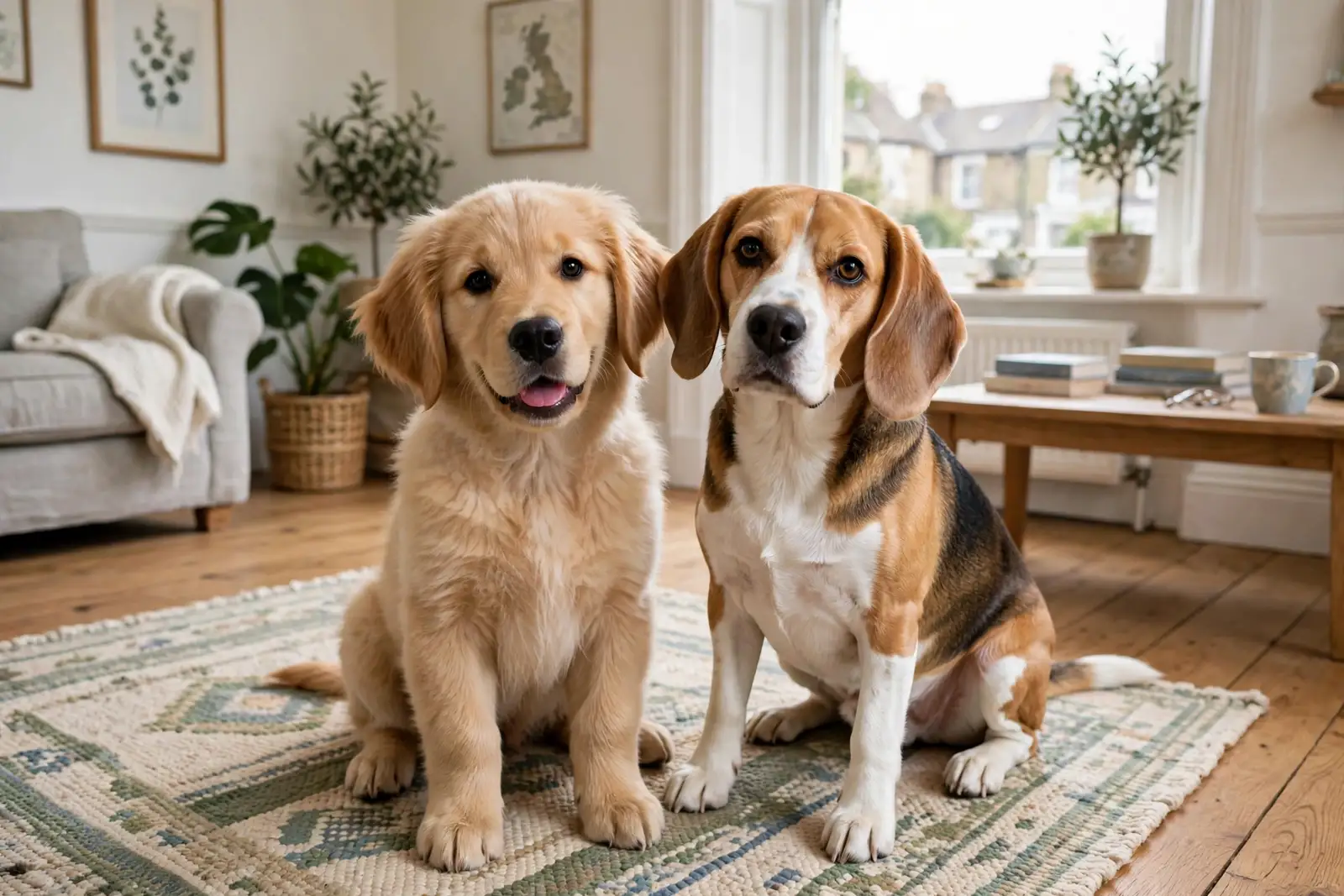
Choosing your first dog is one of the happiest decisions you will make, and the breed you pick shapes daily life for the next 10 to 15 years. The best dog breeds for first-time owners are the ones that forgive beginner mistakes, enjoy training, and settle happily into a normal family routine. A good first dog does not need an expert handler. It needs patience, consistency, and a home that understands what the breed was made for.
This guide covers seven breeds that suit first-time owners in the UK, what each one needs day to day, and the honest trade-offs nobody tells you at the breeder’s door. It also covers the practical questions to settle before you bring a puppy home.
What makes a breed good for beginners
Three traits matter most for a first dog. The first is temperament. A breed that is steady, friendly, and tolerant of noise and visitors is far easier to live with than one that is nervous or reactive. The second is trainability. Some breeds learn a recall in a week, while others take months of patient repetition. The third is exercise need. A breed that is happy with two moderate walks a day fits most working households better than one that needs two hours of running.
Grooming and health matter too. A breed that needs daily brushing or has known health problems will cost more time and money than a low-maintenance one. First-time owners should look at the whole picture, not just the puppy photos.
Labrador Retriever
The Labrador is the classic first dog for a reason. Labradors are friendly, patient, and eager to please, which makes training straightforward. They love people, including children, and they cope well with busy households. A Labrador needs about two hours of exercise a day as an adult, plus games that use its brain, like scent work or retrieving.
The trade-offs are real. Labradors shed heavily, they eat anything they can reach, and they stay puppy-like for two or three years. They are also prone to weight gain, so food must be measured rather than left out. If you can handle the shedding and the energy, a Labrador is hard to beat as a first dog.
Golden Retriever
Golden Retrievers share the Labrador’s gentle nature with a slightly calmer pace. They are affectionate, loyal, and famously good with children. Training is usually easy because Goldens want to cooperate. They need around two hours of daily exercise and regular brushing to keep their coat free of tangles.
The main cost is grooming and the hair that comes with it. Goldens shed all year and need brushing three or four times a week. They can also be prone to certain health problems, so choosing a breeder who health-tests the parents matters. A good breeder will show you the test results without being asked.
Cavalier King Charles Spaniel
If you live in a flat or a smaller home, the Cavalier is one of the best first dogs you can choose. Cavaliers are small, gentle, and happy with two short walks a day. They love company and are content to curl up beside you in the evening. They get on well with children, visitors, and other dogs.
The honest trade-off is health. Cavaliers are prone to heart problems, so a puppy from health-tested parents is essential, and vet bills can be higher than average over the dog’s life. They also dislike being left alone for long hours, so they suit homes where someone is around most of the day.
Beagle
Beagles are cheerful, sturdy, and full of character. They are small enough for most homes, hardy in British weather, and generally healthy. A Beagle needs about 90 minutes of exercise a day and plenty of sniffing time, since the breed was made to follow scent.
The challenge is recall. A Beagle that catches an interesting smell can switch its ears off completely, so off-lead walks need a secure field until recall is reliable. Beagles can also be vocal, which matters if you have close neighbours. Patient training and a long line solve most of this, but it takes time.
Border Terrier
Border Terriers are small, tough, and good-natured, and they are one of the easiest terriers for a first-time owner. They need about an hour of exercise a day, they are generally healthy, and their wiry coat needs only occasional hand-stripping. They are affectionate without being clingy, and they usually get on well with other dogs.
They do have a terrier streak. A Border Terrier may chase squirrels and dig in the garden, so a secure fence and a recall plan matter. They are also clever enough to learn bad habits quickly, so early training and clear rules help a lot.
Whippet
Whippets surprise first-time owners. They look like athletes, and they can sprint faster than almost any other breed, but at home they are calm, quiet, and happy to sleep for most of the day. A Whippet needs a good run in a secure field plus a couple of short walks, and then it is content on the sofa.
Whippets feel the cold, so a coat is needed in winter, and they should not be let off lead near roads because their chase instinct is strong. They are sensitive dogs that respond badly to shouting, so gentle, reward-based training works best. For a quiet household that wants a low-maintenance companion, a Whippet is a lovely choice.
Cockapoo
The Cockapoo, a Cocker Spaniel crossed with a Poodle, is one of the most popular first dogs in the UK. Cockapoos are friendly, clever, and low-shedding, which suits allergy-prone homes. They need about an hour of exercise a day and regular grooming to stop their coat matting.
Because the cross is so popular, quality varies. Some Cockapoos are calm and steady, while others are highly strung. Meeting the puppy’s parents and choosing a breeder who breeds for temperament, not just looks, makes a real difference. A well-bred Cockapoo is a joyful, easy first dog.
Before you bring a puppy home
Settle the practical questions first. Work out who walks the dog on weekdays, what happens during holidays, and how much vet care and insurance will cost each month. Puppies need the garden secured, cables hidden, and a quiet sleeping spot ready before arrival day. A crate, a bed, food bowls, and a lead are the basics, and a vet appointment in the first week is worth booking in advance.
Think about travel too. Many first-time owners discover that a dog changes how they holiday. If you plan road trips together, our guide to preparing your car for a long road trip covers the checks that keep everyone safe, and our guide to choosing a hotel in the UK includes what to ask about pet-friendly stays. For wet-weather walks, our guide to choosing the right coat for UK weather applies to owners as much as anyone else.
Days out with your new dog
Once your puppy is vaccinated, short outings build confidence. Parks, riverside paths, and open green spaces are ideal for a young dog learning the world. Our look at Riverway Sports Park shows the kind of outdoor space that suits active families, and our piece on year-round sport in Russellton is a reminder that an active lifestyle and a dog go well together in every season.
Ready to meet your new best friend
The best dog for a first-time owner is not the most fashionable breed. It is the one whose energy, size, and temperament fit your home, your schedule, and your patience. Labradors and Goldens suit active families, Cavaliers and Whippets suit quieter homes, and Beagles, Border Terriers, and Cockapoos suit owners who want character with manageable needs. Visit breeders, meet adult dogs of the breed, and ask honest questions about health and temperament. The right match will reward you with 10 to 15 years of companionship, and the time you spend choosing well now is the best investment you can make in that friendship.
