

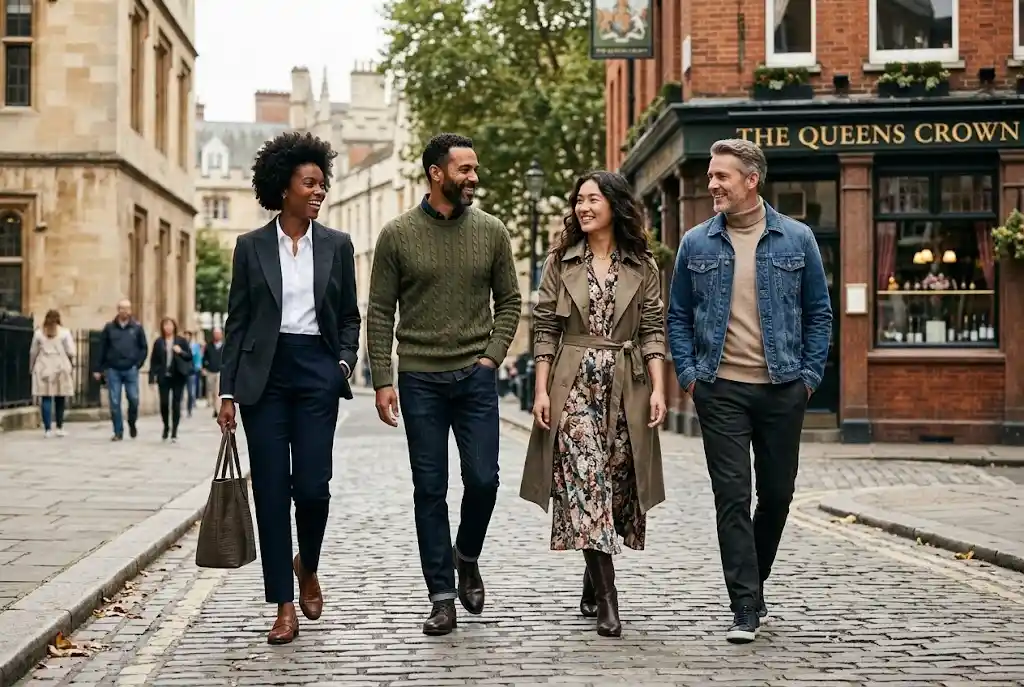
Choosing clothes that flatter your body shape is less about following strict fashion rules and more about understanding what makes you feel comfortable, confident and well-balanced.
Every body is different, and there is no single “correct” way to dress. Instead of trying to change your shape or follow every trend, focus on clothing that fits well, works with your proportions and reflects your personal style.
From choosing the right neckline and trouser shape to balancing proportions with layers and accessories, a few simple principles can make shopping and getting dressed much easier.
What Does It Mean to Dress for Your Body Shape?
Dressing for your body shape simply means choosing clothing based on your natural proportions and the silhouette you want to create.
It does not mean that certain body shapes can only wear particular clothes. Fashion is personal, and you should wear whatever makes you feel good.
Understanding proportions can simply give you another useful tool when deciding what to buy.
When choosing clothing, consider:
- How the garment fits your shoulders and waist
- Where hemlines fall
- The shape and rise of trousers
- Neckline proportions
- Fabric weight and structure
- How different layers interact
- What parts of an outfit you want to emphasise
Why Fit Matters More Than Body Shape
Before worrying about body-shape categories, pay attention to fit.
A garment that fits properly can make an outfit look polished regardless of whether it follows a traditional style recommendation.
Clothing should generally allow you to move comfortably without excessive pulling, bunching or sagging.
Check areas such as:
- Shoulder seams
- Waistbands
- Trouser length
- Sleeve length
- Jacket structure
- Dress and skirt proportions
If something fits well in most places but needs a small adjustment, alterations can sometimes make a significant difference.
Common Body Shape Categories
You may have heard body shapes described using terms such as hourglass, pear, apple, rectangle and inverted triangle.
These categories are simply broad ways of describing proportions. They are not scientific measurements or fixed identities.
Your body can also change over time, and your proportions may not fit neatly into one category.
Use these descriptions as styling ideas rather than rules.
How to Dress an Hourglass Shape
An hourglass shape is commonly described as having shoulders and hips that are relatively balanced with a more defined waist.
If you want to highlight this balance, you can experiment with clothing that follows the natural waistline.
Useful options may include:
- Wrap-style dresses
- High-waisted trousers
- Belted jackets
- Fitted knitwear
- Tailored clothing
- Waist-defined dresses
However, you do not need to emphasise your waist. Relaxed clothing can look equally stylish if that is closer to your personal preference.
How to Dress a Pear Shape
A pear shape is often described as having hips that are wider than the shoulders.
If you want to create a more balanced appearance, you can experiment with adding visual interest around the upper body while keeping the lower half relatively streamlined.
Try:
- Interesting necklines
- Structured jackets
- Statement tops
- Brighter or patterned upper layers
- Straight-leg trousers
- A-line skirts
These are suggestions rather than requirements. If you prefer drawing attention to your legs or hips, there is no reason not to do so.
How to Dress an Apple Shape
Apple-shaped proportions are often described as carrying more visual volume around the middle of the body.
If you prefer a more elongated or relaxed silhouette, consider:
- Open jackets
- Longer cardigans
- V-neck tops
- Straight-leg trousers
- Structured outerwear
- Relaxed but tailored clothing
Layering can create vertical lines that make an outfit feel more streamlined without requiring restrictive clothing.
How to Dress a Rectangle Shape
A rectangle shape is often described as having relatively similar measurements through the shoulders, waist and hips.
If you want to create more definition, you can experiment with:
- Belts
- Waist-shaped jackets
- Wrap tops
- Layering
- Peplum-inspired silhouettes
- High-waisted trousers
You can also embrace a straight silhouette with relaxed tailoring and minimal styling. There is no requirement to create curves if you do not want to.
How to Dress an Inverted Triangle Shape
An inverted triangle shape is commonly described as having broader shoulders compared with the hips.
If your aim is to create visual balance, you could experiment with keeping the upper half relatively simple while introducing more shape or detail below the waist.
Consider:
- V-neck tops
- Simple structured jackets
- Straight or wide-leg trousers
- A-line skirts
- Interesting trouser colours
- Minimal shoulder detailing
Again, these are optional styling ideas rather than rules about what you should wear.
How to Choose the Right Neckline
Necklines can influence the overall appearance of an outfit.
Common options include:
- V-neck
- Round neck
- Boat neck
- Square neck
- High neck
- Sweetheart neckline
- Collared shirts
Different necklines create different visual effects, but personal preference should come first.
If you like how a particular neckline looks and feels, there is no need to avoid it simply because a traditional body-shape guide recommends something else.
How to Choose Trousers for Your Shape
Trouser shape can change the overall silhouette of an outfit.
Common styles include:
- Straight leg
- Wide leg
- Bootcut
- Tapered
- Skinny
- Relaxed fit
- High rise
- Mid rise
When choosing trousers, pay attention to both the fit and the proportion of the entire outfit.
For example, wide-leg trousers can work particularly well with a more fitted top if you want to create contrast. Alternatively, a relaxed top can create an intentionally oversized look when paired with similarly relaxed trousers.
How to Choose Jeans That Flatter Your Shape
Jeans are one of the most versatile pieces in a wardrobe, but finding the right cut can take some experimentation.
Consider:
- The rise
- The leg shape
- The waistband
- The denim weight
- The wash and colour
- Where the hem finishes
Do not focus solely on what is currently trending. A pair of jeans that fits comfortably and works with several outfits can be more valuable than a trend-led style you rarely wear.
Once you find a silhouette you like, you can use it as a reliable foundation for casual and smart-casual outfits.
How Jackets and Blazers Can Change Your Silhouette
Jackets and blazers are useful styling tools because they can add structure and create clear lines through an outfit.
A structured blazer can make casual clothing look more polished, while a relaxed jacket can soften a formal outfit.
Pay attention to:
- Shoulder width
- Jacket length
- Button position
- Waist shaping
- Fabric weight
For example, a longer open jacket can create a vertical line through an outfit, while a shorter jacket can place more emphasis around the waist or hips.
How to Use Colour to Create Balance
Colour can influence where the eye is drawn within an outfit.
If you want to make your wardrobe easier to style, start with versatile neutral colours such as navy, black, grey, cream, beige and brown.
You can then use brighter colours or patterns strategically.
For example, a statement top can draw attention towards the upper body, while coloured trousers can make the lower half a more noticeable part of the outfit.
There is no universally flattering colour. Skin tone, hair colour, personal preference and styling all influence what works for an individual.
How Patterns Can Affect an Outfit
Patterns can add personality and visual interest.
Stripes, checks, florals, geometric designs and other prints can all work across different body shapes.
If you are new to patterns, start with one patterned piece and keep the rest of the outfit relatively simple.
You can also experiment with pattern scale. Larger prints create a stronger visual statement, while smaller patterns may feel more understated.
Use Proportions Rather Than Rules
One of the most useful concepts in personal styling is proportion.
Instead of asking whether a specific item is “allowed” for your body shape, consider how the different parts of the outfit work together.
For example:
- Oversized top with streamlined trousers
- Fitted top with wide-leg trousers
- Short jacket with high-waisted trousers
- Long coat over a simple fitted base
- Relaxed dress with structured footwear
These combinations create different visual relationships between clothing pieces.
How to Use Belts
A belt can provide definition and introduce another visual element to an outfit.
Belts can be worn with:
- Jeans
- Tailored trousers
- Dresses
- Coats
- Long cardigans
- Blazers
You can match the belt with your shoes or bag for a coordinated appearance, or use it as a contrasting accessory.
How Layering Can Improve an Outfit
Layering is particularly useful for UK wardrobes because it allows you to adapt to changing temperatures.
It can also help create more interesting proportions.
Try combinations such as:
- T-shirt with an open shirt
- Blouse with a cardigan
- Shirt with a jumper
- Simple outfit with a structured blazer
- Knitwear under a tailored coat
Keep the number of layers appropriate for the weather and avoid adding bulk where you do not want it.
How to Choose Dresses for Your Shape
Dresses come in many silhouettes, including:
- Wrap
- A-line
- Shift
- Shirt dress
- Slip dress
- Fit-and-flare
- Column
- Maxi
- Midi
Instead of searching for a dress based only on your body-shape category, consider where you want the dress to sit, how much movement you need and which silhouette makes you feel comfortable.
A well-fitting simple dress can also become more versatile when combined with different shoes, jackets and accessories.
Choose Fabrics That Work for You
Fabric affects how clothing hangs, moves and feels.
Soft fabrics may create a relaxed appearance, while structured fabrics can produce sharper silhouettes.
For everyday clothing, consider comfort as well as appearance. If a fabric feels uncomfortable against your skin or requires excessive maintenance, you may find yourself avoiding the garment regardless of how attractive it looks.
Seasonality matters too. Lightweight fabrics can be useful during warmer months, while wool, heavier knits and layered fabrics can provide more warmth during colder UK weather.
How to Dress for Your Height
Height can influence how clothing proportions appear, but there are no strict rules about what you should wear.
If you want to create a longer visual line, you can experiment with:
- Similar colours from top to bottom
- High-waisted trousers
- Long vertical layers
- Streamlined footwear
- Well-proportioned hems
If you prefer stronger contrast and oversized silhouettes, those can work too. The key is making the proportions look intentional.
How to Choose Clothes If You Have a Fuller Figure
If you have a fuller figure, prioritise fit and comfort rather than trying to hide your body.
Structured clothing can provide definition, while softer fabrics can create relaxed silhouettes.
Useful things to consider include:
- Comfortable waistbands
- Appropriate garment length
- Supportive fabrics
- Layering
- Tailoring
- Well-proportioned footwear
The most important consideration is whether the clothing allows you to move comfortably and makes you feel confident.
How to Dress for a Smaller or Petite Frame
If you are petite, clothing proportions can sometimes feel more important than the actual garment size.
You may prefer:
- Shorter jacket lengths
- Well-fitted trousers
- Higher waistlines
- Smaller-scale accessories
- Tailoring that matches your proportions
However, oversized clothing can also look excellent on a petite frame when styled intentionally. There is no need to avoid volume completely.
How to Dress for a Taller Frame
Taller people can often experiment with longer lengths and larger proportions.
Long coats, wide-leg trousers, oversized knitwear and larger accessories can all work depending on personal preference.
If you prefer a more streamlined appearance, fitted tailoring and coordinated colours can provide a different effect.
Do You Have to Dress According to Your Body Shape?
No.
Body-shape guides should be treated as optional styling tools, not rules.
If you love a particular trend, colour, silhouette or garment, you do not need permission to wear it.
The most useful approach is to understand why you like certain clothes and use that knowledge when building outfits.
How to Find Your Personal Style
Personal style develops through experimentation.
Pay attention to outfits you naturally save, admire or repeatedly wear. Look for patterns in your choices.
You might discover that you consistently prefer:
- Minimalist outfits
- Classic tailoring
- Relaxed streetwear
- Neutral colours
- Bold prints
- Feminine silhouettes
- Sporty pieces
- Vintage-inspired clothing
Once you recognise those preferences, shopping becomes easier because you can make decisions based on your own style rather than whatever happens to be popular.
For more general guidance on creating outfits that combine confidence and comfort, read our article on how to look stylish and feel comfortable for any occasion.
How to Build a Flattering Wardrobe on a Budget
You do not need to buy a large number of clothes to create outfits that suit you.
Start with a few versatile pieces that fit well and can be combined in different ways.
Before buying something, ask:
- Does it fit comfortably?
- Do I like the silhouette?
- Does the colour suit my existing wardrobe?
- Can I create several outfits with it?
- Will I actually wear it?
- Does it reflect my personal style?
This approach can help you avoid expensive mistakes and reduce unnecessary shopping.
Common Styling Mistakes to Avoid
Following Body-Shape Rules Too Strictly
Body-shape guides are suggestions, not laws. Avoid limiting your wardrobe because of a category.
Ignoring Fit
Even the most flattering style will not work well if the garment is uncomfortable or poorly fitted.
Buying Clothes for Trends Alone
A trend may look appealing online but may not suit your lifestyle or existing wardrobe. Choose trends selectively.
Wearing the Wrong Size
Do not assume that the number or letter on a label determines whether something fits. Sizing varies between brands, so judge the garment by how it actually feels and looks.
Forgetting Comfort
Clothing should work for real life. If you cannot comfortably sit, walk or move in an outfit, it may not be the right choice for you.
A Simple Formula for Choosing Better Clothes
If you are unsure whether a garment suits you, use this simple process:
- Check the fit: Make sure you can move comfortably.
- Check the proportions: Look at how the garment works with the rest of the outfit.
- Check the colour: Decide whether it complements your existing wardrobe.
- Check the occasion: Make sure it suits your lifestyle and where you intend to wear it.
- Check your confidence: Most importantly, ask whether you actually feel good wearing it.
Frequently Asked Questions
How do I know what clothes suit my body shape?
Start by identifying the clothing cuts, proportions and silhouettes in which you feel most comfortable. Body-shape categories can provide ideas, but fit and personal preference are more important.
What is the most flattering clothing style?
There is no single style that flatters everyone. The best clothing is usually well-fitted, comfortable and suited to your personal proportions and preferences.
Can I wear oversized clothes regardless of my body shape?
Yes. Oversized clothing can work across different body shapes. The key is creating intentional proportions rather than allowing the outfit to look accidentally oversized.
Should I avoid certain clothes because of my body shape?
No. Body-shape advice should not be treated as a list of restrictions. Use it to explore styling possibilities rather than deciding what you are allowed to wear.
How can I make an outfit look more balanced?
Experiment with proportions, layers, colours and silhouettes. Combining fitted and relaxed pieces can create visual balance without requiring a specific body-shape formula.
How can I choose better clothes when shopping online?
Check the size guide, garment measurements, fabric information and return policy. Compare measurements with clothing you already own rather than relying only on standard size labels.
Conclusion
Choosing clothes that flatter your body shape does not require following a strict set of fashion rules. Your body is unique, and your wardrobe should reflect your personality, lifestyle and comfort.
Focus first on fit, then experiment with proportions, colours, fabrics, necklines, layers and silhouettes. Use body-shape guidance as a source of ideas rather than restrictions.
The goal is not to dress according to someone else’s definition of a perfect body. It is to understand what works for you, build confidence in your choices and create a wardrobe that makes getting dressed easier.
