

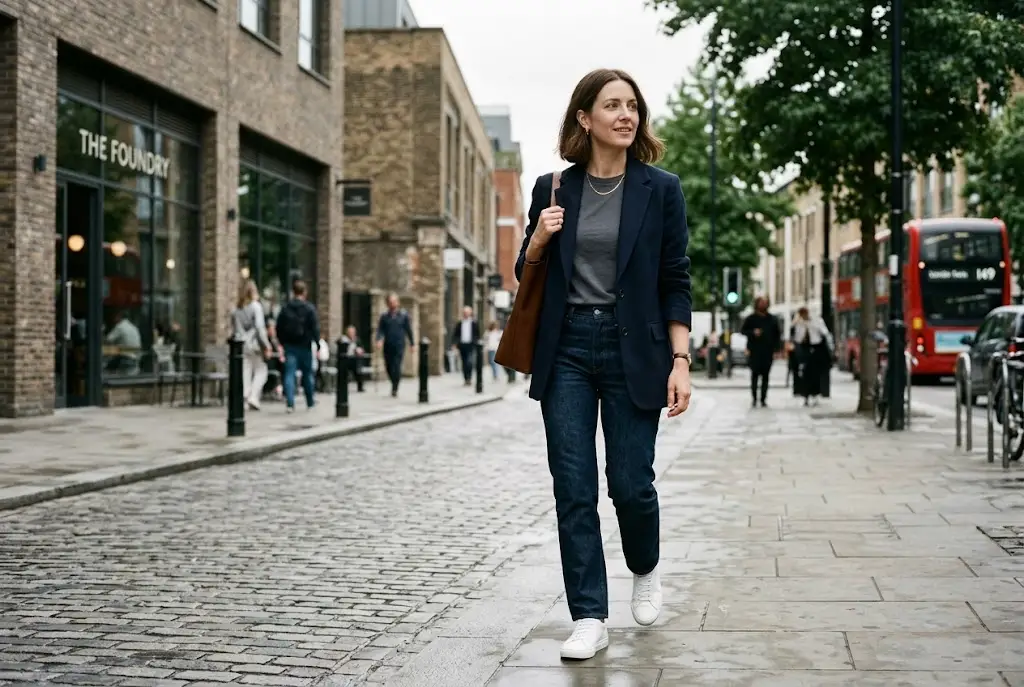
Whether you are getting dressed for work, meeting friends or heading out for the weekend, learning how to create stylish outfits with basic clothes can make everyday dressing easier and more affordable.
Why Basic Clothes Are the Foundation of Good Style
Basic clothes are versatile pieces that can work across different outfits and occasions. Think plain T-shirts, well-fitting jeans, simple shirts, neutral knitwear, tailored trousers, trainers, loafers, coats and uncomplicated jackets.
Rather than relying on trends, these pieces give you a dependable foundation. This is also why building a capsule wardrobe can make getting dressed more straightforward.
The difference between an ordinary outfit and a stylish one often comes down to how the individual pieces are put together.
Start With a Simple Base Outfit
One of the easiest ways to create a stylish outfit is to begin with a simple combination of basics. For example, you could start with:
- A plain white or neutral T-shirt
- Well-fitting jeans or trousers
- Clean trainers, loafers or boots
This gives you a blank canvas. From there, you can add a jacket, overshirt, knitwear, jewellery, a belt or another accessory depending on the occasion.
Keeping the base simple also makes it easier to experiment without making the outfit feel overworked.
Focus on Fit Before Anything Else
Good fit can make inexpensive or basic clothing look considerably more polished. Clothes that are too tight, excessively loose or poorly proportioned can make an otherwise good outfit feel uncomfortable or unfinished.
Pay attention to the shoulders of shirts and jackets, trouser length, sleeve length and the overall shape of the outfit. Your clothes do not need to be tailored, but they should sit comfortably and create a balanced silhouette.
Use Neutral Colours as Your Starting Point
Neutral colours are particularly useful when working with basic clothes. Black, white, grey, navy, beige, cream, brown and denim can be combined in countless ways.
For example, a navy overshirt can work with a white T-shirt and jeans, while a beige coat can complement black trousers and simple trainers.
Once you are comfortable with neutrals, introduce one stronger colour through a jumper, bag, scarf or other accessory. This creates visual interest without requiring an entirely new wardrobe.
Combine Different Textures
If your outfit is built mostly around plain colours, texture can stop it from looking flat. Try combining materials such as denim, cotton, wool, leather, corduroy or knitwear.
A plain T-shirt with jeans may look simple, but adding a textured knit cardigan or structured jacket can immediately give the outfit more depth.
This is especially useful during the UK’s cooler months, when layering provides plenty of opportunities to combine different textures.
Add One Strong Layer
You do not need several layers to make an outfit interesting. One well-chosen outer layer can completely change a basic combination.
Try adding:
- A blazer for a smarter appearance
- An overshirt for relaxed everyday dressing
- A denim jacket for a casual outfit
- A structured coat for a more polished look
- A simple cardigan for comfortable layering
For more ideas, see our guide to how to style a blazer with both casual and smarter outfits.
Use Accessories to Make Basics Feel Personal
Accessories can make a familiar outfit feel completely different. A watch, belt, handbag, scarf, sunglasses, simple jewellery or structured bag can add personality without changing the main clothes.
The goal is not to wear as many accessories as possible. Instead, choose one or two pieces that complement the rest of the outfit.
For example, a plain jumper and trousers can look more considered with a good-quality belt and simple watch. A basic jeans-and-T-shirt combination can feel more distinctive with a structured jacket and understated jewellery.
Build Around One Statement Piece
Basic outfits do not have to be completely plain. Adding one standout item can give the whole look a focal point.
This could be a colourful coat, patterned shirt, distinctive trainers, bold bag or interesting pair of trousers. Keep the rest of the outfit relatively simple so the statement piece remains the focus.
This approach is particularly useful if you want to experiment with trends without replacing your entire wardrobe.
Try the Three-Piece Outfit Formula
A simple styling trick is to think in terms of three visible elements rather than just a top and bottom.
For example:
- T-shirt + jeans + blazer
- Shirt + trousers + overshirt
- Jumper + jeans + coat
- Top + tailored trousers + cardigan
The third element gives the outfit more structure and makes a basic combination look more deliberate.
Change Your Shoes to Change the Outfit
Shoes can significantly influence the overall feel of basic clothes. The same jeans and shirt can look casual with trainers, more polished with loafers or more rugged with boots.
When deciding what to wear, think about whether your footwear matches the formality of the rest of the outfit.
If you like combining comfortable footwear with smarter clothing, our guide to styling trainers offers more ideas.
Use Jeans in More Than One Way
A good pair of jeans can form the basis of numerous outfits. For casual days, combine them with a T-shirt and trainers. For a smarter look, try a shirt, blazer and loafers.
Different washes also create different effects. Darker denim generally feels more polished, while lighter denim can create a relaxed appearance.
For more combinations, explore our guide on how to style jeans for different occasions.
Keep Your Wardrobe Versatile
The easiest way to create more outfits from basic clothes is to choose pieces that work with several other items. Before buying something new, consider whether you can create at least three different outfits with it.
A versatile wardrobe gives you more combinations without requiring more clothing. You can explore this approach further in our guide to building a versatile wardrobe for every season.
Simple Outfit Formulas to Try
When you are short on time, outfit formulas can remove some of the guesswork.
Casual Weekend
Plain T-shirt + straight-leg jeans + trainers + lightweight jacket.
Smart Casual
Oxford-style shirt + tailored trousers + loafers + blazer.
Relaxed Everyday
Fine-knit jumper + jeans + clean trainers + simple coat.
Easy Evening Outfit
Dark trousers + fitted top or shirt + blazer + understated accessories.
Make Basic Clothes Look More Expensive
Looking polished is not necessarily about spending more money. Clean, well-maintained clothing, good fit and thoughtful combinations can make a significant difference.
Pay attention to details such as removing visible lint, keeping shoes clean, ironing or steaming clothes when needed and replacing heavily worn basics.
Quality does matter in some areas, but you do not need premium versions of every item. Spend more selectively on pieces you wear frequently and keep the rest practical.
Do Not Overcomplicate Your Outfit
One of the easiest mistakes when trying to look stylish is adding too many elements. If you already have a strong jacket, interesting shoes and a noticeable accessory, you may not need another statement piece.
A useful rule is to look at the complete outfit before leaving the house and ask whether every element has a purpose. If something feels unnecessary, removing it can often improve the overall result.
Build a Personal Style From What You Already Own
Creating stylish outfits with basic clothes is ultimately about understanding what works for you. Pay attention to the combinations you enjoy wearing, the colours you repeatedly choose and the silhouettes that make you feel comfortable.
Instead of copying every new trend, use your existing wardrobe as a starting point and gradually develop a style that feels natural.
For broader inspiration, our guide on how to look stylish and feel comfortable for any occasion covers the wider principles of putting together practical, confident outfits.
Final Thoughts
Learning how to create stylish outfits with basic clothes can make your wardrobe more useful without making it bigger. Start with good-fitting essentials, use versatile colours, introduce different textures, add one strong layer and finish with carefully chosen accessories.
The aim is not to make every outfit complicated. It is to make simple pieces work harder, so you can create more combinations from the clothes you already own and develop a style that feels both practical and personal.
