

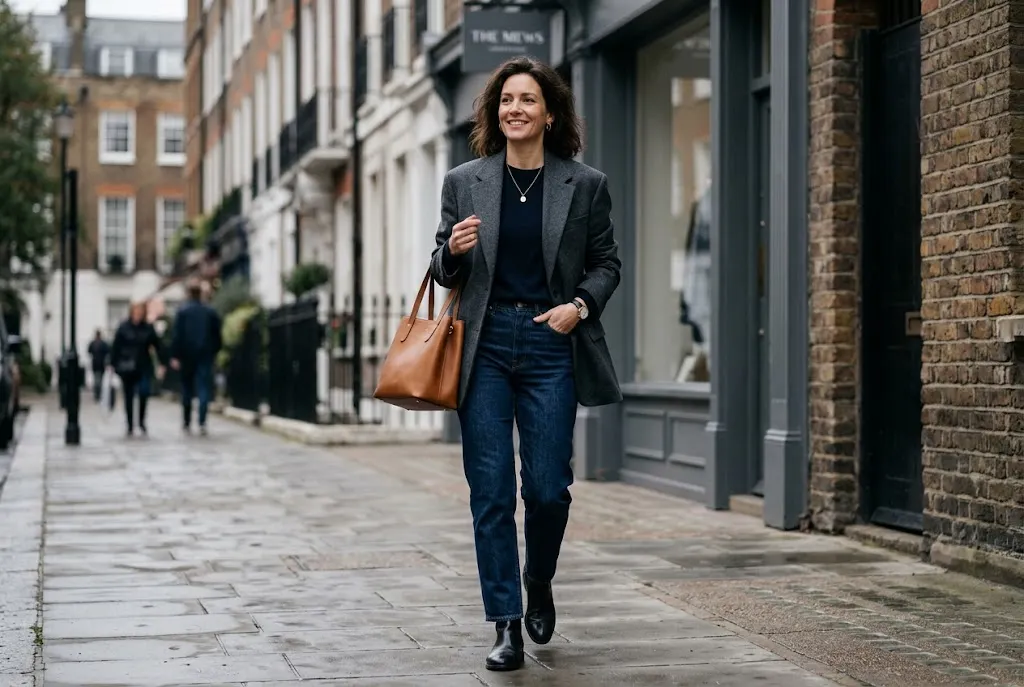
Whether you are dressing for work, a casual day out, dinner or a special occasion, the right accessories can add the finishing touch without taking attention away from the rest of your outfit.
Why Accessories Matter in an Outfit
Accessories give you an opportunity to add character to simple clothing. A watch, handbag, belt, scarf, necklace or pair of sunglasses can make familiar wardrobe pieces feel different.
They can also help bring an outfit together by repeating a colour, adding contrast or creating a more polished finish.
This is particularly useful when your wardrobe is built around versatile basics. Instead of buying completely new clothes, you can create different looks by changing the accessories.
Start With the Outfit, Not the Accessories
A common mistake is choosing accessories before deciding what you are wearing. Instead, start with the main outfit and then identify what it needs.
Ask yourself whether the outfit needs:
- A practical bag
- A belt to define the waist or complete the look
- A watch or simple jewellery
- A scarf for warmth or colour
- Sunglasses for a casual daytime outfit
- A statement accessory to create a focal point
This approach helps you avoid adding accessories simply because you have them.
Choose One Main Focal Point
If you want to make a statement, let one accessory take centre stage. This could be a bold necklace, colourful handbag, distinctive watch, patterned scarf or eye-catching pair of shoes.
Keep the rest of the accessories relatively understated so the outfit has a clear focal point.
For example, a simple jeans-and-shirt outfit can work well with a statement handbag while keeping jewellery and footwear minimal.
Keep Everyday Jewellery Simple
For everyday outfits, simple jewellery is often enough. Small hoops, understated earrings, a delicate necklace, a watch or a few carefully chosen rings can add detail without overwhelming the outfit.
If you prefer layered jewellery, vary the lengths or shapes so individual pieces remain visible rather than blending into one large cluster.
Use Bags to Add Structure and Colour
A handbag or crossbody bag is both practical and stylistic. A structured bag can make a relaxed outfit look more polished, while a softer bag can complement casual clothing.
Neutral bags are particularly versatile because they can work across many outfits. If most of your clothes are neutral, a coloured bag can also provide a simple way to introduce contrast.
Do Not Feel the Need to Match Everything
Your shoes, belt and bag do not always need to be exactly the same colour. Matching can create a coordinated appearance, but overly precise matching can sometimes make an outfit feel forced.
Instead, look for colours and materials that complement one another. Different shades within the same colour family can often work better than trying to make every item identical.
Think About Proportion
The size of an accessory should work with the rest of your outfit and your overall proportions.
A large statement necklace may work particularly well with a simple neckline, while delicate jewellery can be easier to wear with detailed clothing.
The same principle applies to bags, belts, sunglasses and other accessories. Consider how much visual space each item occupies before adding another one.
Use Accessories to Balance Basic Clothes
Accessories are especially useful when wearing simple wardrobe staples. A plain T-shirt, jeans and trainers can provide a strong foundation, but adding a belt, watch and structured bag can make the outfit look much more intentional.
This works particularly well if you are trying to create more outfits from a smaller wardrobe. Our guide to building a capsule wardrobe explains how versatile pieces can form the foundation of everyday dressing.
Let Shoes Become Part of the Styling
Shoes are one of the most noticeable accessories and can change the entire character of an outfit.
Clean white trainers can keep an outfit relaxed, loafers can make it more polished, while boots can give it a stronger and more practical feel.
If you enjoy combining comfortable footwear with different clothing styles, see our guide on how to style trainers.
Add a Scarf for Practical Style
A scarf can be one of the easiest ways to introduce colour, texture or pattern to an outfit. It is also particularly practical for the UK climate.
If your outfit already contains several colours, choose a relatively simple scarf. With a neutral outfit, a patterned or colourful scarf can become the main visual feature.
Consider Colour Before Adding More Accessories
If an outfit already contains several noticeable colours, you may not need colourful accessories as well.
Instead, choose accessories in neutral shades or colours already present in the outfit. This creates a more cohesive appearance.
For more guidance, our guide on how to mix colours in an outfit covers simple ways to build balanced colour combinations.
Match Accessories to the Occasion
The right accessories depend on where you are going. A casual weekend outfit allows more freedom, while workwear and formal occasions may benefit from a more restrained approach.
For example, a simple watch and structured bag may be enough for the office. For an evening event, you might choose one more noticeable piece of jewellery or a distinctive clutch.
When dressing casually, trainers, sunglasses, crossbody bags and relaxed scarves can add personality without making the outfit feel formal.
Use Texture to Add Interest
Accessories do not always need to introduce another colour. Texture can be just as effective.
A leather belt, knitted scarf, suede shoes or textured handbag can give a neutral outfit more depth while keeping the colour palette simple.
This is a useful technique when you prefer understated outfits but still want them to look considered.
Follow the Less-Is-More Principle
If you are unsure whether an accessory is necessary, remove it and look at the outfit again. Sometimes the simpler version works better.
This does not mean you should avoid accessories. It simply means each accessory should contribute something, whether that is function, colour, texture, proportion or personality.
Simple Accessory Combinations to Try
Here are a few easy combinations that work with everyday clothing:
- Casual: Trainers + crossbody bag + sunglasses
- Smart casual: Watch + belt + loafers
- Winter: Scarf + structured coat + boots
- Minimal: Small jewellery + simple bag + clean trainers
- Statement: Neutral outfit + one bold bag or jewellery piece
Build an Accessory Collection Gradually
You do not need dozens of accessories to create variety. A small collection of versatile pieces can cover most everyday situations.
Consider starting with a few neutral items, such as a practical bag, simple belt, everyday watch, versatile shoes and understated jewellery. You can then add statement pieces that reflect your personal style.
This approach also makes it easier to maintain a versatile wardrobe without constantly buying new clothing.
Remember That Personal Style Matters
There is no single correct way to accessorise. Some people prefer minimal styling, while others enjoy layered jewellery, colourful bags or statement pieces.
The most useful guidelines are the ones that help you feel comfortable and confident. Start with simple combinations, then experiment with accessories that genuinely suit your personality.
Final Thoughts
Learning how to accessorise an outfit without overdoing it is mainly about balance. Start with the clothes you are wearing, choose accessories that serve a purpose and avoid giving every piece equal visual importance.
One strong focal point, a controlled colour palette and a few well-chosen finishing touches can often do more than a collection of accessories competing for attention. With practice, even simple everyday outfits can feel polished, personal and complete.
